Luang Prabang: The Spiritual Heart of Laos
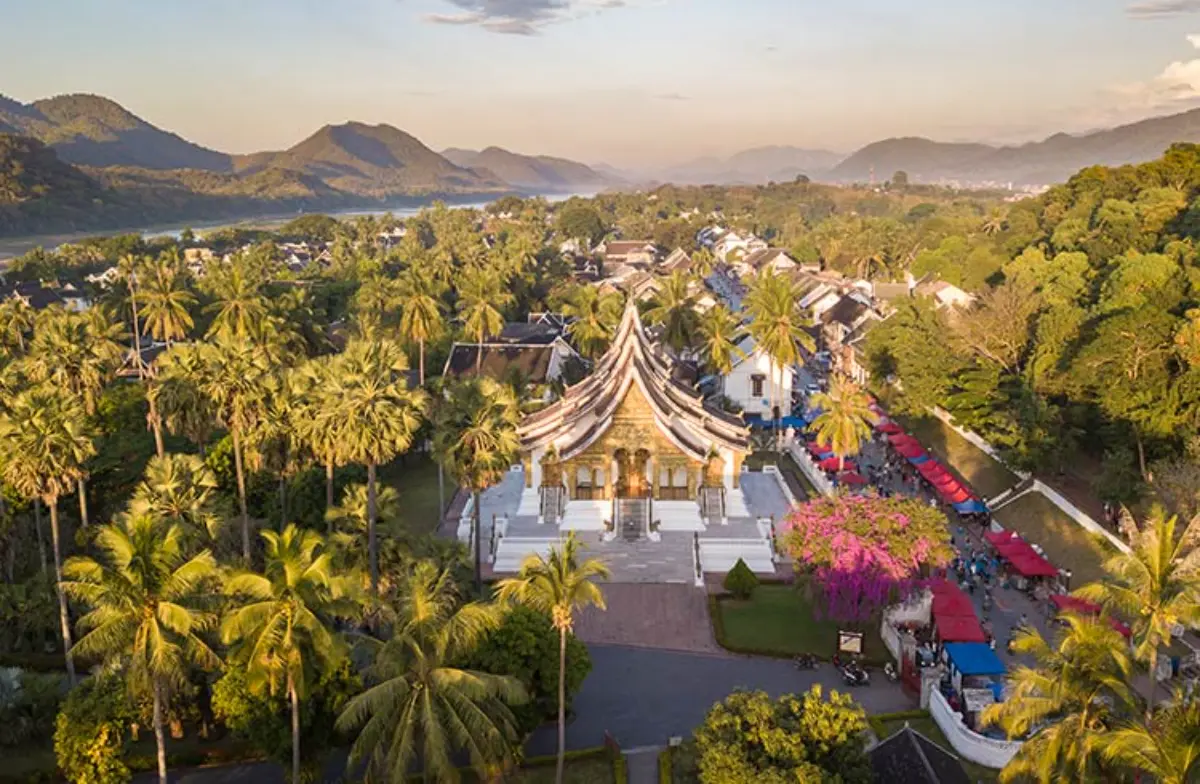
The Temples of the Peninsula
Gleaming Roofs and Sacred Buddhas
Luang Prabang is home to over 30 active temples. The most revered is Wat Xieng Thong, the “Temple of the Golden City,” built in 1560 at the tip of the peninsula. Its sweeping rooflines, mosaics of the tree of life, and its status as the burial site of Lao royalty make it the spiritual heart of the city. Wat Mai, with its five‑tiered roof, is known for its gilt bas‑reliefs and its role as the home of the Prabang Buddha after which the city is named. Wat Visoun, the “Watermelon Temple,” houses a large bronze Buddha and the ruins of an earlier stupa. Exploring the temples is a journey into Lao Buddhist art, architecture, and devotion.
The Alms‑Giving Ceremony
Dawn on the Streets
Every morning at dawn, the monks of Luang Prabang walk the streets in silent procession, receiving offerings of sticky rice from the faithful. This is the tak bat — a ritual that has been practiced for centuries. Visitors are welcome to observe, and to participate, with respect: dress modestly, remain quiet, and offer rice from a seated position. The procession begins around 5:30 AM, when the streets are still dark, and the city is quiet. It is a moment of profound peace — a reminder of the centrality of Buddhism to Lao life.
Kuang Si Falls
A Cascading Masterpiece
Thirty kilometers southwest of the city, Kuang Si Falls is one of the most beautiful waterfalls in Southeast Asia. The falls cascade over limestone terraces into a series of turquoise pools, their water so clear you can see the sand below. Visitors can swim in the pools, hike to the top of the falls, and visit the nearby Bear Rescue Center, which cares for sun bears rescued from the wildlife trade. A visit to Kuang Si is a half‑day excursion, and the cool water is a welcome respite from the tropical heat.
Mount Phousi
The Heart of the City
At the center of the peninsula, Mount Phousi rises 100 meters above the city. A climb of 355 steps leads to the summit, where Wat Chom Si offers panoramic views of the Mekong, the Nam Khan, and the rooftops of Luang Prabang. The climb is best made at sunrise or sunset, when the light is golden and the city is at its most beautiful. Along the way, small shrines and Buddha images are tucked into the rock.
The Night Market & Cuisine
From the Mekong to the Table
The Night Market on Sisavangvong Road is the social heart of Luang Prabang. Stalls sell textiles, handicrafts, and — most importantly — food. Lao cuisine is a revelation: laap (minced meat salad with herbs), mok pa (steamed fish in banana leaves), khao soi (noodle soup), and the ubiquitous khao niao (sticky rice), eaten with the fingers. The market is also the best place to try sai oua (herbal sausage) and fresh fruit shakes. For a more refined experience, the city’s restaurants offer French‑Lao fusion in colonial‑era buildings.
Traditional Crafts
Living Traditions
Luang Prabang is a center for traditional Lao crafts. The Ock Pop Tok weaving center offers workshops where you can learn the art of Lao silk weaving. The Traditional Arts and Ethnology Centre preserves the crafts of Laos’s ethnic groups. In the villages across the Nam Khan, you can see saa paper being made from mulberry bark, and lao whisky being distilled from rice.
Luang Prabang Tour Packages
City Discovery (2–3 Days): Explore the temples, Mount Phousi, the night market, and the alms‑giving ceremony.
Waterfall Excursion: A half‑day trip to Kuang Si Falls, with time to swim and visit the bear rescue center.
Mekong Cruise: A boat trip on the Mekong to the Pak Ou Caves, where thousands of Buddha images are enshrined.
Combined Itinerary: Pair Luang Prabang with Vientiane or the Plain of Jars for a broader exploration of Laos.
The Essence of Luang Prabang — Luang Prabang is a place that asks you to slow down. To rise at dawn for the alms‑giving, to walk the temple paths in the afternoon, to watch the sun set over the Mekong. It is a city where the spiritual and the everyday coexist, where the sound of temple bells marks the hours, and where the river flows as it has for centuries. For those who seek a destination that nourishes the soul, Luang Prabang offers an experience that is both deeply moving and quietly transformative.
Frequently Asked Questions
A minimum of 3 days allows you to explore the temples, visit Kuang Si Falls, and experience the alms‑giving ceremony. For a more relaxed pace, 4–5 days is ideal.
The dry season (November–April) offers the most comfortable weather. The rainy season (May–October) is lush and green, with fewer tourists.
By air to Luang Prabang International Airport (LPQ) from Bangkok, Hanoi, Siem Reap, or Vientiane. By train on the Laos‑China Railway from Vientiane. By boat on the Mekong from Huay Xai (slow boat, 2 days).
Modest dress is required for temples — shoulders and knees covered. Lightweight, breathable clothing for the tropical climate. A light jacket for early morning.
Laap (minced meat salad), mok pa (steamed fish), khao soi (noodle soup), and sticky rice. The night market is the best place for street food.
Yes. The city is walkable, the temples are accessible, and Kuang Si Falls is a highlight for children.