Northwest Cambodia Travel Guide | Temples, Battambang & Tonlé Sap | Asia Travel Mates
Skip to main content
Region · Temple Heartland

Northwest Cambodia: The temple heartland.

Discover Angkor Wat at sunrise, ride the Bamboo Train through Battambang’s rice paddies, wander remote jungle temples, and feel the quiet artistic soul of Cambodia’s northwest.

6 Provinces Siem Reap Hub Angkor Wat 5–7 Days Ideal Nov–Feb Best
Provinces 6 provinces — Siem Reap, Battambang, Banteay Meanchey, Preah Vihear, Oddar Meanchey, Pailin
Main Hub Siem Reap
Iconic Site Angkor Wat
Airport Siem Reap–Angkor (SAI)
About the Region

The Temple Heartland of Cambodia.

Northwest Cambodia is the country’s temple heartland — a region of vast archaeological landscapes, artistic river towns, and quiet countryside that stretches from the Tonlé Sap Lake toward the Thai border. It is home to Siem Reap and the Angkor Archaeological Park, the single greatest temple complex in the world, and to Battambang, Cambodia’s second-largest city and its self-proclaimed “City of Artists.”

The region covers six provinces — Siem Reap, Battambang, Banteay Meanchey, Preah Vihear, Oddar Meanchey, and Pailin — each with its own character. Siem Reap Province is the most visited, home to Angkor and the tourism hub of Siem Reap City. Battambang Province to the west is Cambodia’s rice bowl and artistic heartland. Further north and west, Banteay Meanchey holds the remote temple complex of Banteay Chhmar and the main Thai border crossing at Poipet, while Preah Vihear Province is home to the dramatic cliff-top temple of the same name and the jungle-covered ruins of Koh Ker.

Beyond these centres lie some of Cambodia’s most rewarding lesser-known experiences: the wide, seasonal waters of the Tonlé Sap, whose floating villages offer a glimpse of a very different Cambodian life; the remote temple of Banteay Chhmar; and the quiet border provinces of Oddar Meanchey and Pailin, with their scattered temple sites, gem-mining history, and untouched countryside.

Siem Reap and Angkor

The World’s Greatest Temple Complex

The Angkor Archaeological Park is the heart of Northwest Cambodia — and the single most iconic monument in the country.

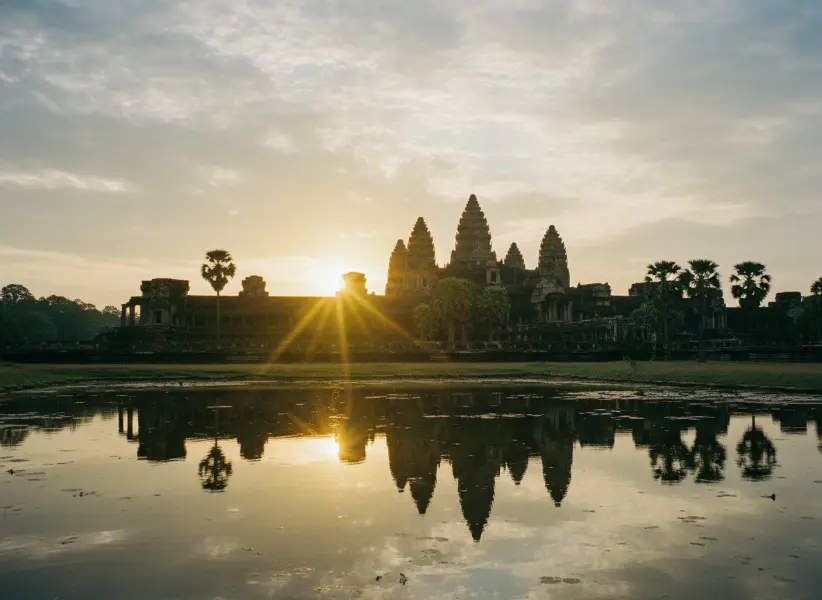
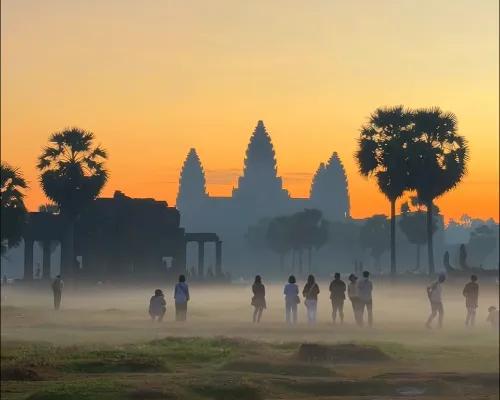
Angkor Wat — the largest religious monument in the world
01 · Angkor Wat

The World’s Largest Temple

Angkor Wat is the largest religious monument in the world, built by Suryavarman II in the early 12th century and dedicated to Vishnu. Famous for its five lotus-bud towers, extensive bas-reliefs, and its unusual westward orientation.

Largest religious monument on Earth
Five lotus-bud towers
Extensive bas-reliefs
Iconic sunrise silhouette
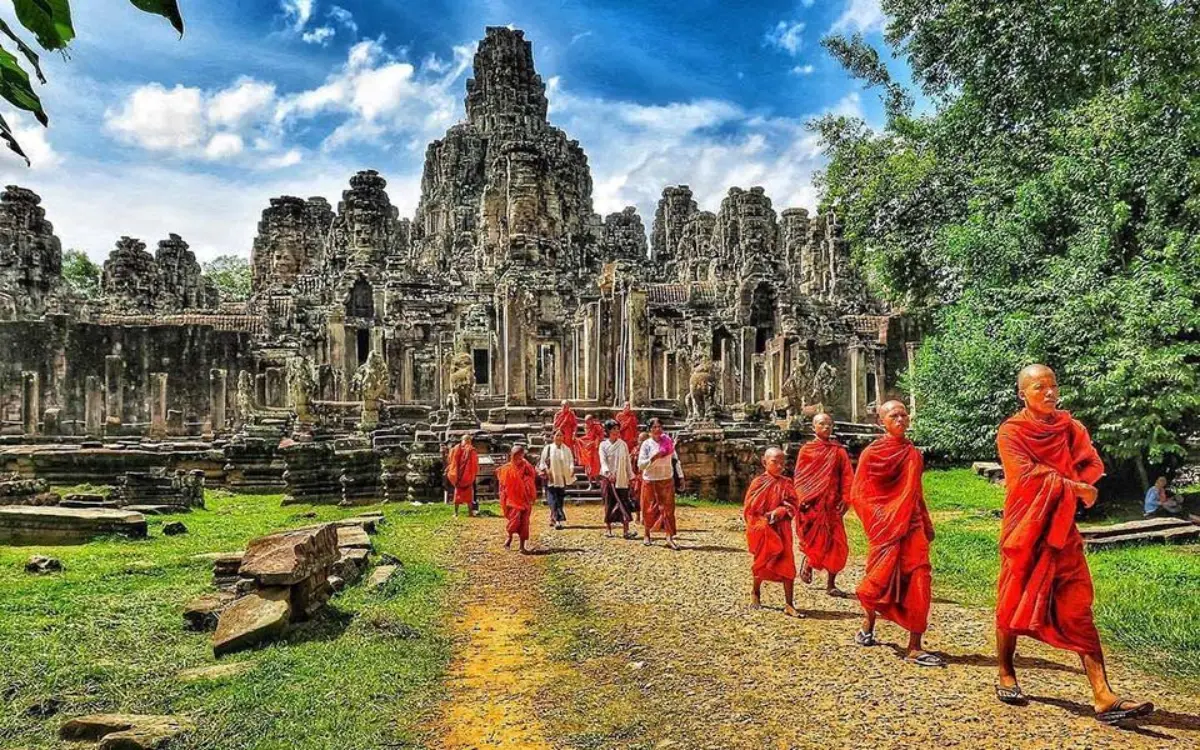
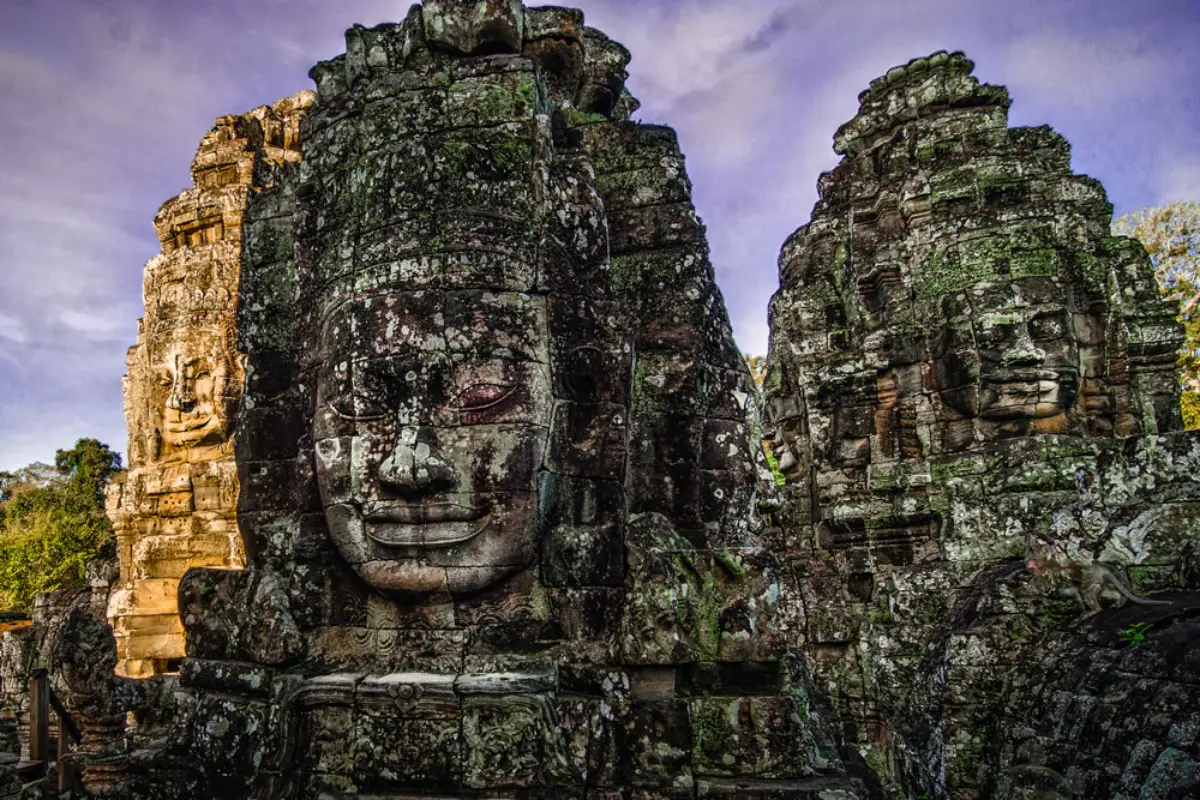
Bayon Temple — the enigmatic stone faces of Angkor Thom
02 · Angkor Thom & Bayon

The Last Great Capital

Angkor Thom was the last great capital of the Khmer Empire, built by Jayavarman VII. At its centre stands Bayon, known for its dozens of serene stone faces and remarkable bas-reliefs. Nearby lie Baphuon, Phimeanakas, and the Terraces of the Elephants and the Leper King.

54 towers with serene faces
Remarkable bas-reliefs
South Gate with devas and asuras
Terrace of the Elephants
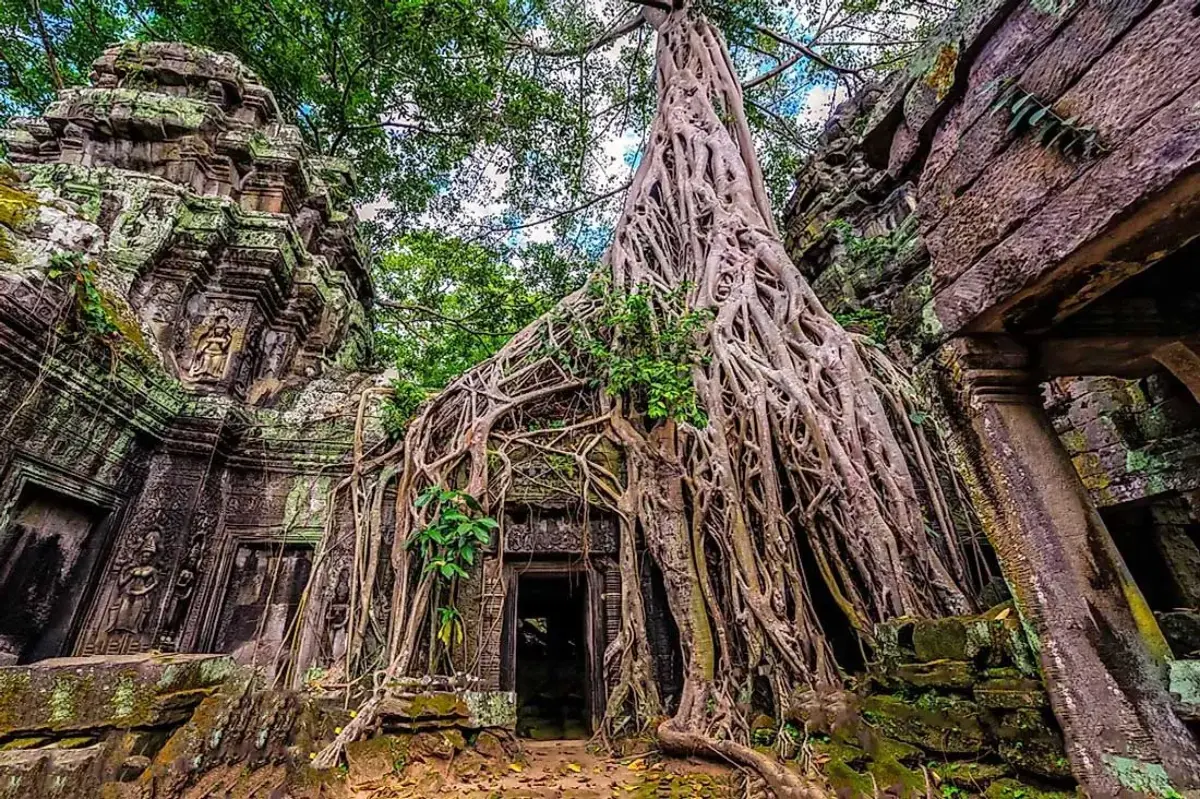
Ta Prohm — jungle roots and ancient stone
03 · Ta Prohm & Preah Khan

Jungle Temples

Ta Prohm has been deliberately left partially overgrown by jungle — its giant trees and winding galleries make it a favourite for photographers and lovers of romantic ruins. Preah Khan is a large, labyrinthine temple built by Jayavarman VII.

Jungle roots engulfing stone
Most atmospheric temple in Angkor
Preah Khan labyrinthine complex
Mix of Buddhist and Hindu imagery
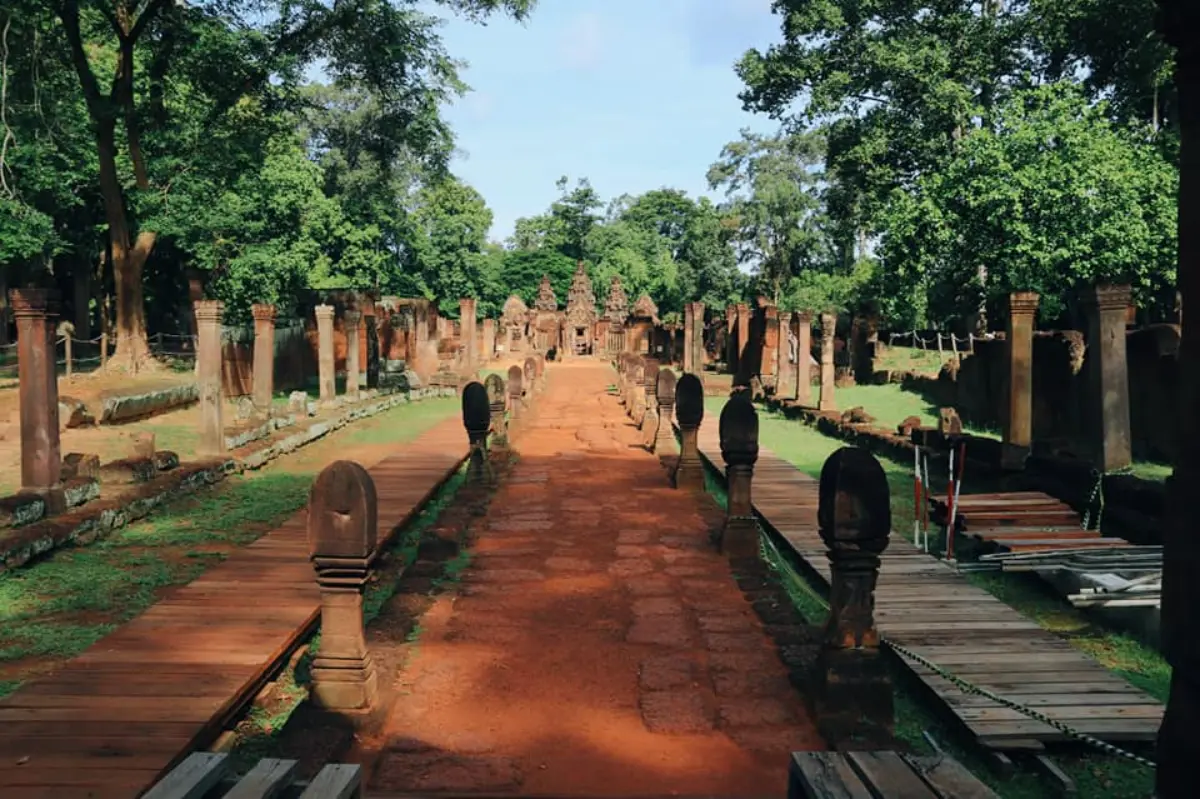
Banteay Srei — the Citadel of Women
04 · Banteay Srei

The Citadel of Women

Beyond the core circuit, Banteay Srei — the “Citadel of Women” — is celebrated for its exquisite pink sandstone carvings. Kbal Spean is a riverbed carved with Hindu deities, reached by a 45-minute forest hike.

Exquisite pink sandstone carvings
10th-century temple
Kbal Spean riverbed carvings
45-minute forest hike
Beng Mealea — a sprawling, jungle-covered temple
05 · Beng Mealea

Jungle Adventure

Beng Mealea is a sprawling, jungle-covered temple that offers a wilder, less-restored experience than the main Angkor circuit. It is about 60 km east of Siem Reap and requires more planning but rewards with quiet, uncrowded exploration.

Sprawling, jungle-covered temple
Wider, less-restored experience
About 60 km east of Siem Reap
Quiet, uncrowded exploration
Siem Reap city — the hub of Northwest Cambodia
06 · Siem Reap City

The Regional Hub

Siem Reap is the main hub of Northwest Cambodia and the gateway to the Angkor Archaeological Park — a low-rise city of Khmer heritage, contemporary hospitality, excellent food, and bustling markets.

Gateway to Angkor
International airport city
Contemporary hospitality and food
Bustling markets and nightlife
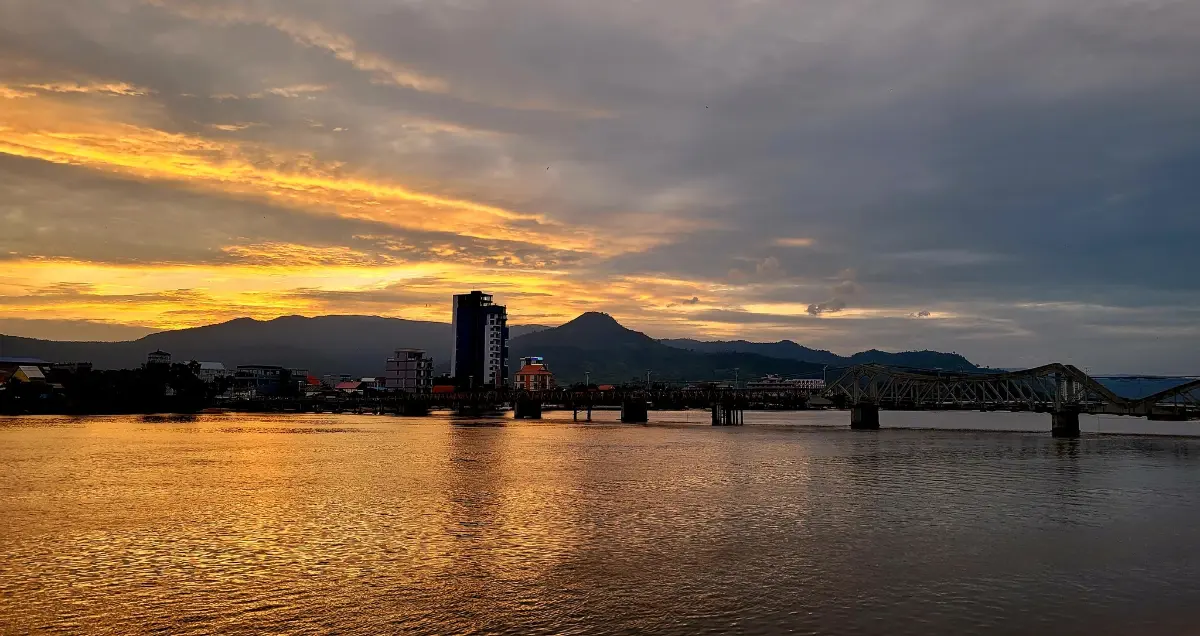
Battambang

Cambodia’s City of Artists

Battambang Province to the west is Cambodia’s rice bowl and artistic heartland — a city of colonial architecture, creative energy, and easy countryside escapes.

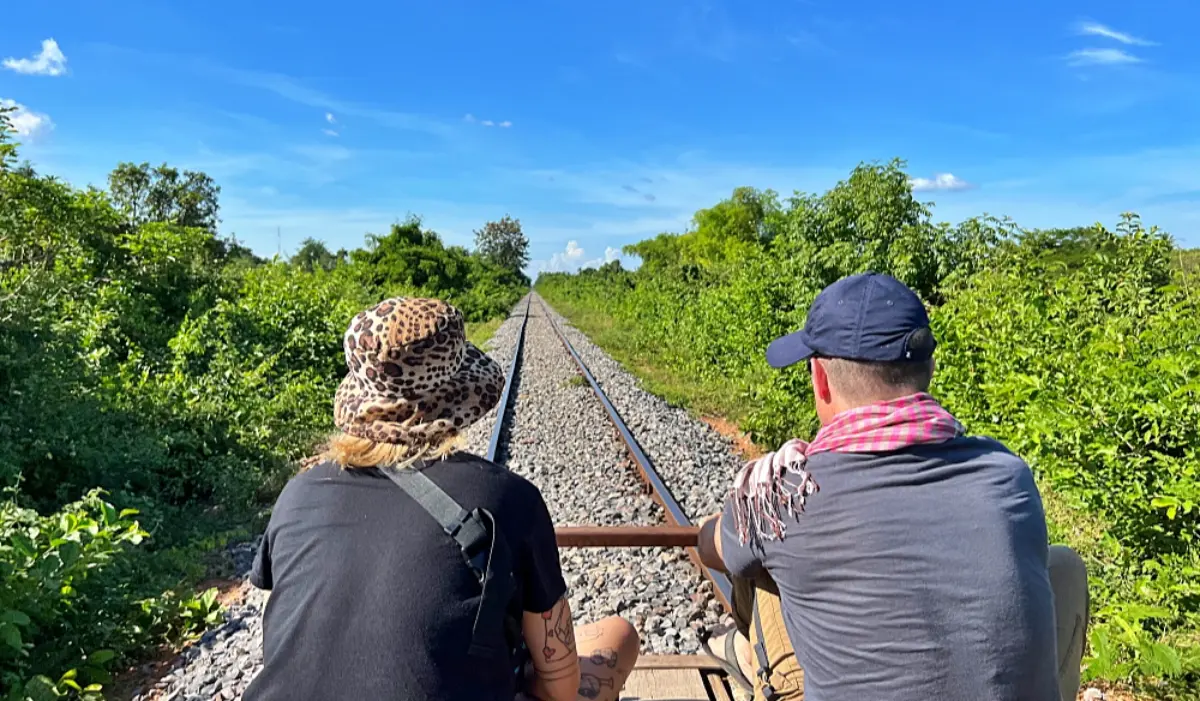
The Bamboo Train — Battambang's beloved novelty experience
01 · The Bamboo Train

The Norry

The Bamboo Train — known locally as the Norry — is a small bamboo platform mounted on steel wheels and powered by a small motorized engine, running along a section of abandoned railway track east of Battambang. One of Cambodia’s most beloved novelty experiences.

Bamboo platform on steel wheels
Small motorized engine
Runs on abandoned railway track
A great way to see the countryside
Phnom Sampeau — limestone hill and bat cave exodus
02 · Phnom Sampeau

Bat Cave Exodus

A dramatic limestone hill about 12 km southwest of Battambang, Phnom Sampeau combines natural beauty, religious heritage, and a painful chapter of Cambodia’s recent history. Its bat cave exodus at sunset is one of Southeast Asia’s most spectacular natural displays.

Dramatic limestone hill
Religious heritage and history
Hundreds of thousands of bats
Spectacular sunset exodus
Phare Ponleu Selpak — Battambang's non-profit arts school and circus
03 · Phare Ponleu Selpak

Brightness of the Arts

Founded in 1994 by former refugee artists, Phare Ponleu Selpak (“the brightness of the arts”) is a non-profit arts school that trains young Cambodians in circus, visual arts, music, and theatre. Its evening circus performances are a must-see cultural experience.

Non-profit arts school
Circus, visual arts, music, theatre
Evening circus performances
Direct support for local community
Phnom Banan and Wat Ek Phnom — Angkor-era temples near Battambang
04 · Phnom Banan & Wat Ek Phnom

Angkor-Era Countryside Temples

Phnom Banan is an ancient Angkor-era temple on a hilltop, with sweeping views across the rice-paddy plains. Wat Ek Phnom is an atmospheric, partly ruined 11th-century temple set among countryside. Both are easily reached by bicycle or tuk-tuk from Battambang.

Angkor-era hilltop temple
Sweeping rice-paddy views
Partly ruined 11th-century temple
Easily reached by bicycle or tuk-tuk
Remote Temples

Beyond the Core Angkor Circuit

Beyond the main Angkor circuit, Northwest Cambodia holds some of the country’s most atmospheric and least-visited temple sites. These require more planning but reward travelers with quiet, uncrowded experiences.

Koh Ker — the 10th-century pyramid temple
01 · Koh Ker

The Pyramid Capital

An important 10th-century capital with a distinctive pyramid temple, Koh Ker is about 120 km from Siem Reap and offers a wilder, more adventurous temple experience. The main pyramid, Prasat Thom, rises seven tiers above the surrounding jungle.

10th-century capital
Distinctive pyramid temple
Prasat Thom rises seven tiers
About 120 km from Siem Reap
Preah Vihear — the dramatic cliff-top temple on the Thai border
02 · Preah Vihear

Cliff-Top Temple

A dramatic cliff-top temple on the Thai border, Preah Vihear offers breathtaking views across the plains of northern Cambodia. A UNESCO World Heritage Site, it requires a full-day trip and border-area planning.

Dramatic cliff-top location
Breathtaking views across Cambodia
UNESCO World Heritage Site
Full-day trip required
Banteay Chhmar — a remote temple complex in Banteay Meanchey
03 · Banteay Chhmar

Remote Temple Complex

A remote and impressive temple complex in Banteay Meanchey Province, Banteay Chhmar is known for its intricate bas-reliefs and is one of Cambodia’s least-visited major temple sites. It sits near the Thai border, surrounded by quiet countryside.

Remote temple complex
Intricate bas-reliefs
Least-visited major temple site
Near the Thai border
Tonlé Sap Lake

Floating Villages and Seasonal Transformation

Tonlé Sap is Southeast Asia’s largest freshwater lake — a vast, seasonally changing body of water that sustains fisheries, agriculture, and floating communities across Northwest Cambodia. It is ecologically unique: in the dry season, it drains into the Mekong; in the wet season, the Mekong’s flow reverses and the lake expands to several times its dry-season size.

Several villages are accessible from Siem Reap — and they are not interchangeable. Chong Khneas is the closest to Siem Reap but the most commercialised. Kampong Phluk is known for its stilted houses and mangrove canoe tours. Kampong Khleang is the largest community and the most authentic, with community-run boats and towering wooden stilts that rise up to 10 metres high.

The Tonlé Sap’s flooded forests and wetlands host rare and endangered species, including the white-shouldered ibis, woolly-necked stork, and lesser adjutant. Conservation efforts continue to protect the lake’s unique ecosystem and the communities that depend on it.

Planning

Best Time to Visit Northwest Cambodia

There is no single “best” month — each season offers a different experience.

November – February Cool & Dry · Best Overall

21–35°C with minimal rain. The most comfortable time for temple touring. This is peak season, so book accommodation and guides in advance.

March – April Hot & Dry

Temperatures can reach 40°C+. Fewer crowds, and Khmer New Year (mid-April) brings vibrant celebrations. Start temple visits early and carry water.

May – October Wet Season · Green

Short heavy afternoon rains, lush landscapes, and fewer crowds. Lower prices and quieter temples. The countryside is at its most vibrant.

Essentials

Practical Travel Information

Getting There

Siem Reap–Angkor International Airport (SAI) is the region’s main gateway, about 50 km east of Siem Reap city. Battambang is connected by road (3–4 hours) and by a scenic seasonal boat service.

Angkor Pass

The 3-day pass costs $62 and can be used within a 7-day window, giving flexibility to spread temple days across your trip.

Getting Around

Tuk-tuks are the classic way to explore Siem Reap and the Angkor temples. Bicycles are perfect for Battambang’s flat countryside. Private cars and minivans connect all major towns.

Dress Code

Cover shoulders and knees at temples. Light, breathable clothing is recommended, along with a hat, sunscreen, and comfortable walking shoes.

Good to know

  • Speak softly, don’t touch carvings, don’t climb on ruins, and ask before photographing monks
  • Cambodia uses US dollars and Cambodian riel side by side — small bills are essential
  • ATMs are limited outside Siem Reap and Battambang
  • Start temple visits early — the light is best and the crowds are thinner
  • Book accommodation and guides in advance during peak season
  • Choose community-run boat services for Tonlé Sap floating village visits
Trip Length

How Many Days in Northwest Cambodia?

5 Days Siem Reap & Battambang

Siem Reap and Angkor plus Battambang — the essential Northwest Cambodia experience.

7 Days Most Balanced Stay

Deeper temple exploration, Banteay Chhmar, and slower countryside time. The ideal stay for most travelers.

8+ Days Deep Exploration

Add remote temples, Preah Vihear, and the quiet border provinces of Oddar Meanchey and Pailin.

Traveler Profile

Northwest Cambodia for Different Travelers

First-Time Visitors

The classic Angkor circuit, city culture, Tonlé Sap, and Khmer food. Five days covers Siem Reap, Angkor, and Battambang.

Luxury Travelers

Private guides, exclusive experiences, fine dining, premium resorts. Siem Reap has one of the best-value luxury hotel scenes in Asia.

Families

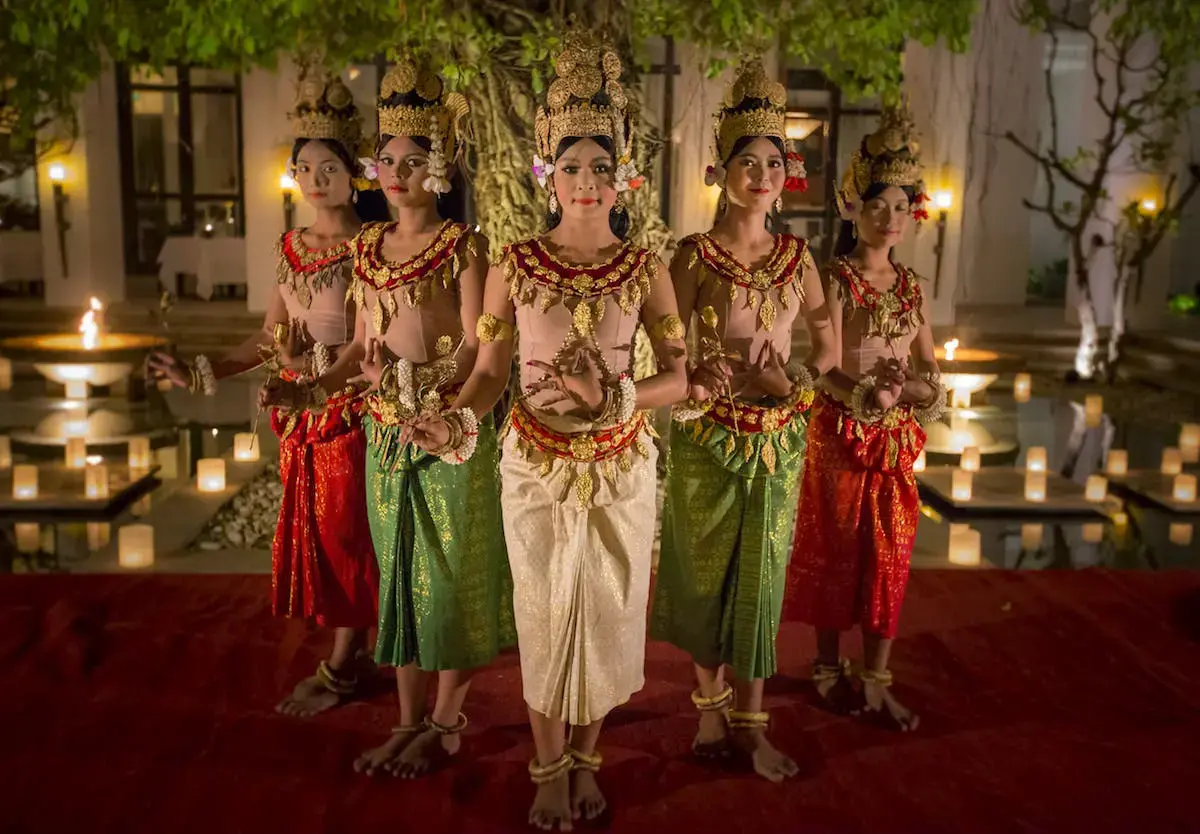
Pool time, shorter temple visits, Tonlé Sap boat trips, and cultural shows. The Bamboo Train and Phare circus in Battambang are loved by children.

Frequently Asked

Questions About Northwest Cambodia

Where is Northwest Cambodia?

Northwest Cambodia covers the provinces of Siem Reap, Battambang, Banteay Meanchey, Preah Vihear, Oddar Meanchey, and Pailin, stretching from the Tonlé Sap Lake toward the Thai border.

What is Northwest Cambodia famous for?

Northwest Cambodia is famous for Angkor Wat and the wider Angkor Archaeological Park, the artistic city of Battambang with its Bamboo Train, and remote temple sites including Banteay Chhmar and Preah Vihear.

How many days do you need for Northwest Cambodia?

Five to seven full days is ideal for most travelers. Five days covers Siem Reap and Angkor plus Battambang. Seven days allows deeper temple exploration, Banteay Chhmar, and slower countryside time.

Is Northwest Cambodia worth visiting?

Yes. Northwest Cambodia is home to the world’s greatest temple complex and some of Cambodia’s most rewarding cultural and countryside experiences. It is essential for any Cambodia itinerary.

What are the best things to do in Northwest Cambodia?

Watch sunrise at Angkor Wat, explore Angkor Thom and Bayon, visit Ta Prohm, ride the Bamboo Train in Battambang, see the Phnom Sampeau bat caves, and visit remote temples like Banteay Srei, Beng Mealea, and Preah Vihear.

What is the best time to visit Northwest Cambodia?

November to February offers the most comfortable weather with cooler temperatures, lower humidity, and clear skies. The green season from May to October is quieter and the countryside is at its most lush.

How do you get around Northwest Cambodia?

Siem Reap is the main hub with an international airport. Tuk-tuks are the classic way to explore the temples. Battambang is connected by road (3–4 hours) and by a scenic seasonal boat service. Private cars, minivans, and buses connect all major towns.

Is Northwest Cambodia suitable for families?

Yes, with planning. Siem Reap offers family-friendly hotels, the Bamboo Train and Phare circus in Battambang are loved by children, and shorter temple visits with pool time make the region manageable.

What should you wear in Northwest Cambodia?

Light, breathable clothing is ideal. Cover shoulders and knees when visiting temples, including Angkor Wat. Bring a scarf or sarong, a hat, and comfortable walking shoes.

Can Northwest Cambodia be combined with Phnom Penh?

Yes. Siem Reap and Phnom Penh are connected by road (5–7 hours), minivan, or a 55-minute flight. Most travelers combine the two on a full Cambodia itinerary.

Local Knowledge

Tips for visiting Northwest Cambodia

  • Start temple visits early — the light is best and the crowds are thinner.
  • Buy the Angkor Pass ($62 for 3 days) and spread your temple days across a 7-day window.
  • Carry small bills in US dollars or Cambodian riel for tuk-tuks and markets.
  • Cover shoulders and knees at all temples; a scarf or sarong is useful.
  • Drink bottled or purified water only.
  • Book accommodation and guides in advance during peak season (November–February).
  • Choose community-run boat services for Tonlé Sap floating village visits.
  • Ask before photographing monks or local people.

Plan your visit

For Travelers

Experience Northwest Cambodia.

From sunrise over Angkor Wat to the Bamboo Train of Battambang, the floating villages of the Tonlé Sap, and remote temples deep in the jungle, we will ensure you experience Cambodia’s cultural heartland in a responsible and meaningful way.

Start Planning →
For Travel Professionals

Cambodia expertise, on the ground.

If you are building Cambodia programs that include Northwest Cambodia, we can support you with local DMC services, vetted guides, and confidential trade rates.

Visit the Trade Page →
Northwest Cambodia

Cambodia’s Temple Heartland.

Discover Angkor Wat at sunrise, ride the Bamboo Train through Battambang’s rice paddies, wander remote jungle temples, and feel the quiet artistic soul of Cambodia’s northwest.