
A peninsula, a river, and three countries that make more sense together than apart.
“Indochina” is the traditional name for the mainland peninsula of Southeast Asia — today most commonly used to mean Vietnam, Cambodia and Laos. The three countries share a peninsula, a major river system in the Mekong, and a long stretch of intertwined history: kingdoms, colonial rule, war, and the slow work of rebuilding.
What makes the region worth travelling as a whole is contrast. Vietnam is dense, fast, coastal and mountainous. Cambodia is flatter, slower, and anchored by the extraordinary ruins of Angkor. Laos is quieter still — landlocked, forested, and unhurried. Travelled in sequence, the three read like three movements of the same piece.
What Indochina is
Indochina — historically “French Indochina” — is the mainland peninsula of Southeast Asia, lying between India and China. In modern travel usage the term most often refers to the three countries of Vietnam, Cambodia and Laos, though it is sometimes extended to include parts of Thailand and Myanmar. This guide uses the three-country definition.
The region’s geography is dominated by the Mekong River, which rises in the Tibetan plateau and runs through China, Myanmar, Laos, Thailand, Cambodia and Vietnam before emptying into the South China Sea through the Mekong Delta. The river is the economic and cultural spine of the peninsula: it supports fisheries, rice agriculture and river transport, and it links the countries in a way that road and air travel do not.
Historically, the three countries were shaped by Indian and Chinese influence, by competing kingdoms — Champa, Angkor, Lan Xang, Dai Viet — and then by French colonial rule from the mid-19th century. The 20th century brought war, partition and revolution, and the region has spent the last several decades rebuilding and opening to travel. Today all three countries are welcoming to visitors, with well-developed tourist infrastructure in the main centres and more basic conditions in remote areas.
For travellers, the appeal of travelling Indochina as a single trip is the way the three countries illuminate one another. The temple architecture of Angkor in Cambodia connects to the Cham towers of central Vietnam. The French colonial architecture of Hanoi, Phnom Penh and Luang Prabang comes from the same source. The Mekong seen from a slow boat in Laos is the same river that fills the canals of the Mekong Delta. Travelled together, the region reads as a whole.
Three countries, three characters
Each country in the region has a distinct rhythm and a different set of highlights. These are the three that make up Indochina in the most common travel sense.
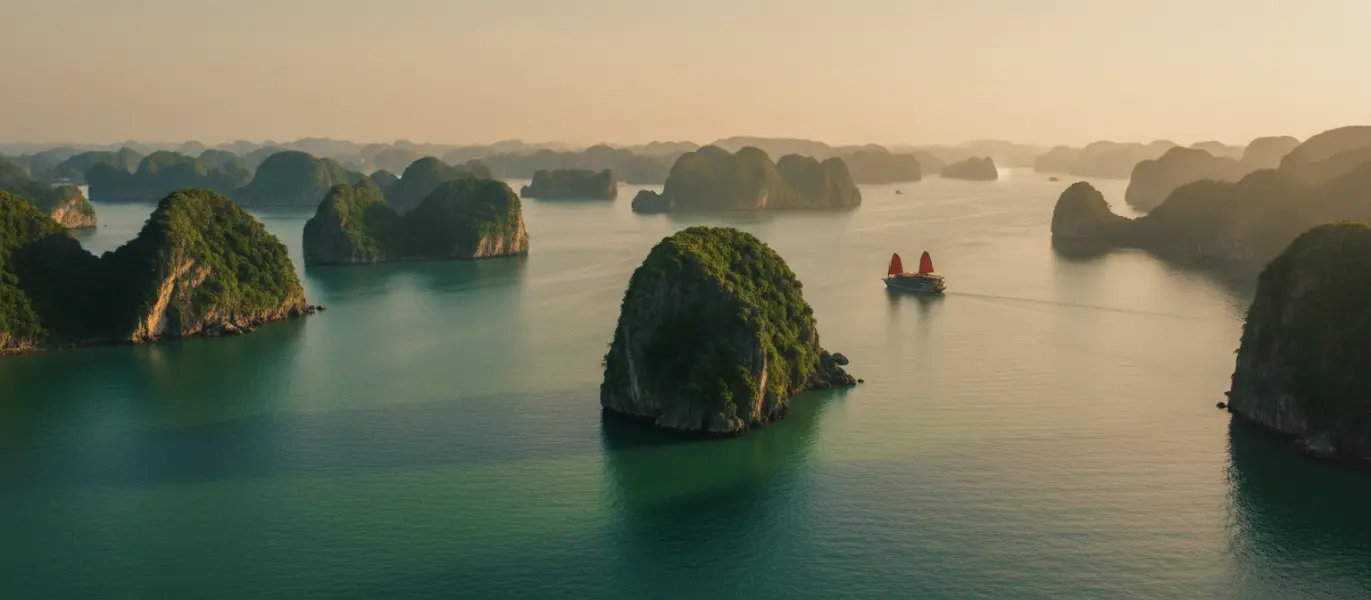
Vietnam
The longest and most varied of the three — 1,650 km from the mountains of the north to the Mekong Delta in the south. Dense cities, spectacular coastline, and a food culture that is reason enough to visit on its own.
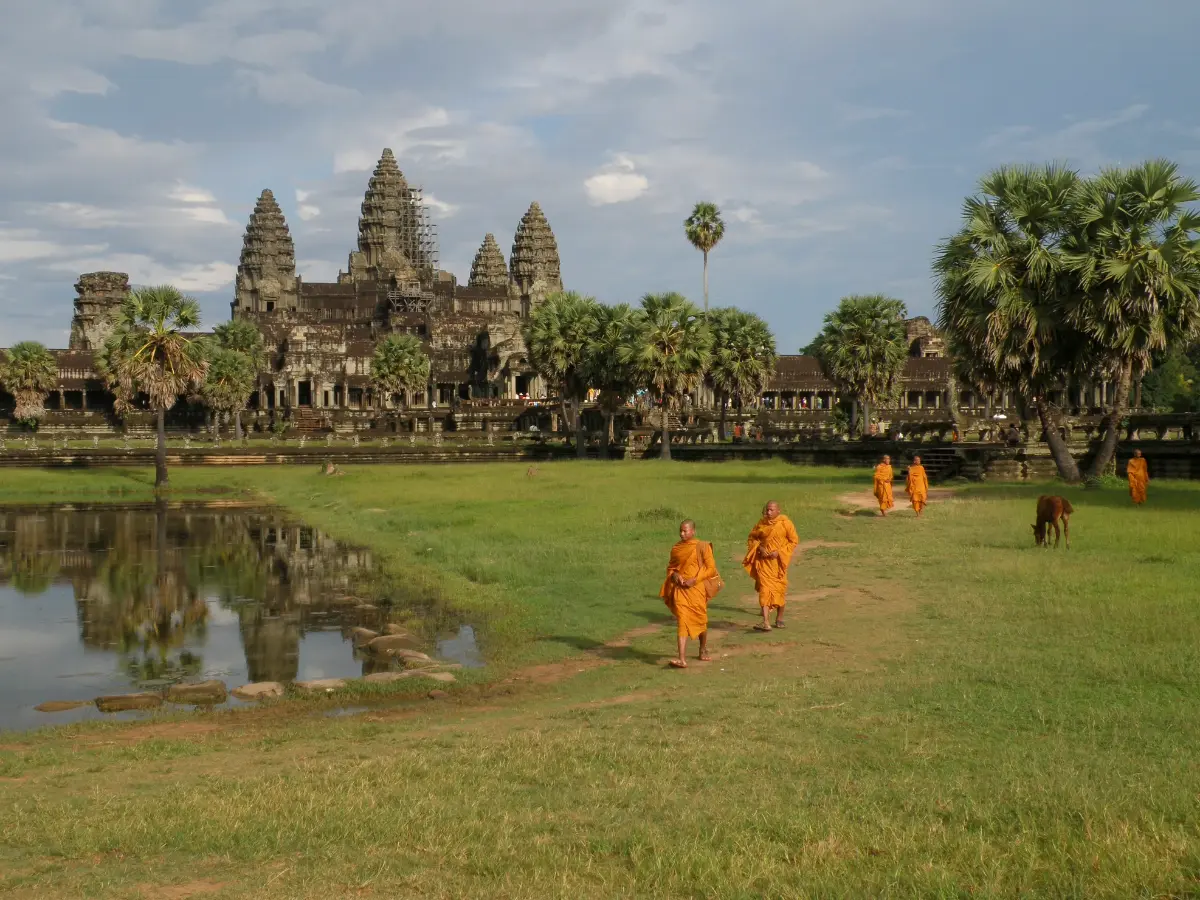
Cambodia
Home to Angkor — the largest religious monument in the world and the single most compelling archaeological site in Southeast Asia. Flatter, slower and warmer than Vietnam, with a gentler pace outside the main sites.

Laos
The quietest of the three — landlocked, heavily forested, and deliberately unhurried. Luang Prabang is the region’s most beautiful town, and the Mekong here is slower and wider than anywhere else.
Indochina, element by element
What actually ties Vietnam, Cambodia and Laos together — beyond geography and a shared colonial past. Six threads run through all three.
The river that connects all three countries — from the slow boats of northern Laos to the floating markets of the Vietnamese delta. Travelling the Mekong is the single most regional experience available.
In Cambodia and Laos, Theravada Buddhism shapes daily life — the temple, the monk, the alms round and the festival calendar. Vietnam follows Mahayana Buddhism, closer to the Chinese tradition.
All three countries were part of French Indochina. Colonial-era buildings survive in Hanoi, Phnom Penh and Luang Prabang, and the coffee-and-baguette culture runs through all three.
All three countries eat on the street — but Vietnam has the strongest and most varied street-food culture, followed by Cambodia. Laos is quieter, with sticky rice as the staple.
The Khmer empire left Angkor in Cambodia; the Cham kingdoms left tower-temples along central Vietnam. The two traditions are related, and visiting both adds depth to either.
The Vietnam War and the Cambodian civil war shaped the region in ways still visible today — in museums, memorials and the careful way the countries talk about the recent past.
When to visit Indochina
The region is tropical, with a monsoon cycle running roughly May to October in most areas. The three countries do not experience the same weather at the same time — this is the most important thing to know when planning a multi-country trip.
The dry season across most of the region. The best months for Cambodia’s temples, Laos, and southern Vietnam. The north of Vietnam can be cool and drizzly in Jan–Feb.
The hottest months before the monsoon. Cambodia and Laos are very hot; the Vietnamese coast is at its best. April brings the Khmer New Year and Lao New Year — festival season, with busy transport.
The southwest monsoon brings heavy rain across much of the region. Rain is usually in heavy afternoon bursts rather than all-day, but travel is unpredictable. Tropical storms can affect the Vietnamese coast.
Northern Vietnam has a colder winter than the rest of the region. Central Vietnam’s dry season is roughly Feb–Aug, out of phase with Cambodia and Laos. Always check country-level detail before booking.
How long do you need?
Indochina is often oversold as a single short trip. Realistically, all three countries need two to four weeks. Below are the standard durations people actually travel.
Realistic for two countries at a comfortable pace — for example Vietnam (north + centre) and Cambodia, or Cambodia and Laos. Three countries in this window is possible but rushed.
The classic window for a single country. Two weeks lets you see Vietnam north to south without constant transit days — Hanoi, Halong Bay, Hoi An, Hue, and Ho Chi Minh City.
The most popular two-country combination. Ten days to two weeks in Vietnam, then a flight to Siem Reap for Angkor and a few days in Cambodia. Comfortable rather than rushed.
The most satisfying way to travel the region. Roughly two weeks in Vietnam, one in Cambodia, one in Laos — or the reverse, travelling north from the Mekong Delta to Luang Prabang.
For travellers who want to include secondary destinations — the northern mountains of Vietnam, northeastern Cambodia, southern Laos and the 4,000 Islands — rather than only the headline stops.
Whichever length you choose, the region rewards slowing down. Fewer stops, longer stays, and one or two river or rail journeys instead of internal flights.
Practical information
Getting around the region
The three countries are connected by a mix of short flights, long-distance buses, trains and river routes. Flights are the fastest option between capitals and major tourist centres; buses and trains are slower but give a much better sense of the region.
Overland crossings between Vietnam, Cambodia and Laos are possible and increasingly straightforward, with well-known border points and regular bus services. The classic overland route is Phnom Penh to Ho Chi Minh City by bus, and the classic river route is the slow boat between Huay Xai and Luang Prabang in Laos. Allow more time than the map suggests — roads are slower than they look.
Good to know
- — Visas are country-specific — check each separately before travel
- — US dollars are widely accepted in Cambodia; less so in Vietnam and Laos
- — Travel insurance covering medical evacuation is strongly recommended
- — Allow buffer days — regional transport often runs late
- — Dress modestly at religious sites across all three countries
Where to go next
Indochina is best explored one country at a time. These are the main country pages, plus the wider regional context they sit within.
Vietnam
From the mountains of the north to the Mekong Delta — the longest and most varied country in the region.
Explore Vietnam → CountryCambodia
Angkor, the Mekong, Tonle Sap and Phnom Penh — a slower, warmer country anchored by extraordinary ruins.
Explore Cambodia → CountryLaos
Landlocked, forested and unhurried — Luang Prabang, the Mekong, and the quietest travel in Southeast Asia.
Explore Laos → Broader RegionAll Destinations
Browse every destination we cover across Southeast Asia — countries, regions, cities and specific places.
Browse All Destinations →Questions About Indochina
Which countries are in Indochina?
In modern travel usage, “Indochina” most commonly means Vietnam, Cambodia and Laos. Historically the term referred to French Indochina — the French colonial territories in the region — which also included parts of what is now Thailand and Myanmar. Today the three-country definition is the one most travellers use, and the one this guide follows.
How long do you need to visit all three countries?
Realistically, four weeks is the minimum for a comfortable trip through all three countries, with roughly two weeks in Vietnam, one week in Cambodia and one week in Laos. Three weeks is more commonly a two-country trip — usually Vietnam and Cambodia. Attempting all three in ten days means spending most of your time in transit, which rarely feels worthwhile.
What is the best time of year to visit Indochina?
The dry season from November to February is the best overall window — cool and dry across Cambodia and Laos, and good conditions in most of Vietnam. March and April are the hottest months before the monsoon. The monsoon runs roughly May to October, bringing heavy but usually short afternoon rain. The important caveat is that the three countries do not share the same weather at the same time, and northern and central Vietnam run out of phase with Cambodia and Laos.
Can you travel between the three countries overland?
Yes. Overland travel between Vietnam, Cambodia and Laos is possible and reasonably well-established, with regular buses and minivans on the main border crossings. The classic routes include Phnom Penh to Ho Chi Minh City by bus, and the slow boat between Huay Xai and Luang Prabang in Laos. Overland travel is cheaper than flying and gives a much better sense of the region, but it is significantly slower — allow buffer time, and treat travel days as full days.
What is the difference between Indochina and Southeast Asia?
Southeast Asia is the wider region, including Thailand, Myanmar, Malaysia, Singapore, Indonesia, the Philippines, Brunei and Timor-Leste as well as Vietnam, Cambodia and Laos. Indochina is a narrower term for the mainland peninsula — and in travel usage, most often just the three countries covered here. When people talk about an “Indochina tour”, they almost always mean Vietnam, Cambodia and Laos.
Which country should I visit first?
It depends on your travel experience and what you want from the trip. Vietnam is the most developed for tourism and the easiest introduction to the region, but it is also the most intense. Cambodia is easier to navigate but hotter and flatter. Laos is the quietest and the gentlest, and some travellers prefer to start there before moving into busier countries. There is no wrong order — the three countries work in any sequence.
Do I need a visa for each country?
Yes — visas are country-specific. Vietnam, Cambodia and Laos each have their own entry requirements, which vary by nationality and change periodically. Some nationalities can enter visa-free for short stays; others need to apply in advance or obtain a visa on arrival. Check the current requirements for each country separately before booking, and confirm details with your specialist or the relevant embassy.
Is Indochina suitable for first-time travellers to Asia?
Yes, with the right pacing. All three countries have well-developed tourist infrastructure in the main centres, English is widely spoken in the tourism industry, and independent travel is straightforward. The main considerations are heat, traffic in the cities, and the amount of ground to cover. Travelling with a specialist is a good option for a first trip, especially if you want to combine all three countries in one itinerary.
Plan an Indochina journey with a specialist.
The region works best when planned as a whole — the right order, the right season, and the right amount of time. Our specialists can design a Vietnam, Cambodia and Laos itinerary around your interests and pace.
Start Planning →Regional ground expertise in Indochina.
If you are building multi-country Indochina programs for your clients, we can support you with local DMC services across Vietnam, Cambodia and Laos, experienced regional guides, and confidential trade rates.
Visit the Trade Page →Three countries. One river. A single long journey.
Whether you want two weeks in Vietnam or a full month across all three countries, our specialists can help you build an Indochina itinerary that works with the seasons and the geography.