
One of Asia’s great cities — old, cultured and completely itself.
Hanoi has been Vietnam’s capital for almost a thousand years — and it shows. The city layers its history visibly: the ancient streets of the Old Quarter, the tree-lined boulevards and yellow colonial villas of the French Quarter, the lakes and temples at its heart, and the modern skyline rising beyond West Lake. Unlike Saigon, Hanoi is a city of slow mornings and long conversations. Coffee is a serious matter. Street food is a way of life.
The city is compact enough to walk, but rich enough to keep returning to. Most travelers base themselves in or near the Old Quarter, where the streets are narrow, the food is exceptional, and everything is within reach. Hanoi also works as the gateway to northern Vietnam — Halong Bay, Sapa, Ninh Binh, Mai Chau and Ha Giang all begin from here. Northern Vietnam has a genuine winter — cool, often misty — from November to March. The best months for most travelers are October–November and March–April.
What Hanoi is
Hanoi is a city of lakes. West Lake, Hoan Kiem Lake, Truc Bach Lake and a dozen smaller ones shape the city’s geography and its daily life. Hanoians walk around them at dawn, meet friends by them in the evening, and use them as reference points for the entire city.
The Old Quarter — the “36 Streets” — is Hanoi’s historic commercial heart, and still functions as one. Each street traditionally specialised in a single trade or craft, and the street names preserve that history: Hang Bac (silver), Hang Gai (silk), Hang Ma (paper goods), Lan Ong (traditional medicine). Today, the area is a dense mix of ancient shophouses, craft stalls, street food, tailors, cafés, and travelers.
South of Hoan Kiem Lake, the French Quarter reflects Hanoi’s colonial period — wide tree-lined boulevards, grand yellow villas, the Opera House, and the grand colonial hotels that still define the area’s character. The city is compact and rewarding on foot, with most of the key places within walking distance of each other.
The parts of Hanoi
6 DistrictsHanoi is best understood as a collection of distinct neighbourhoods. Each has its own rhythm, and most travelers move between them over the course of a visit.
The Old Quarter
Hanoi’s historic commercial heart — the 36 Streets, tube houses, markets, street food and craft lanes. Where most travelers stay and spend most of their time.
Hoan Kiem District
The lake, the water puppet theatre, the surrounding cafés and the eastern edge of the French Quarter. Central, walkable, atmospheric.
The French Quarter
South of Hoan Kiem — the Opera House, colonial villas, wide boulevards and grand hotels. Hanoi’s most European-feeling area.
Ba Dinh District
The political heart of Vietnam — the Ho Chi Minh Mausoleum, Presidential Palace, One Pillar Pagoda and the Temple of Literature nearby.
Tay Ho & West Lake
The largest lake in the city, lined with cafés, restaurants, embassies and the Tran Quoc Pagoda. Quieter and more residential.
Long Bien & the Red River
East of the Old Quarter — the historic Long Bien Bridge, riverside neighborhoods, and banana gardens along the Red River.
Places in Hanoi
8 Key PlacesThese are the specific places within Hanoi that we plan most often. Each can be visited independently or woven into a longer day in the city.
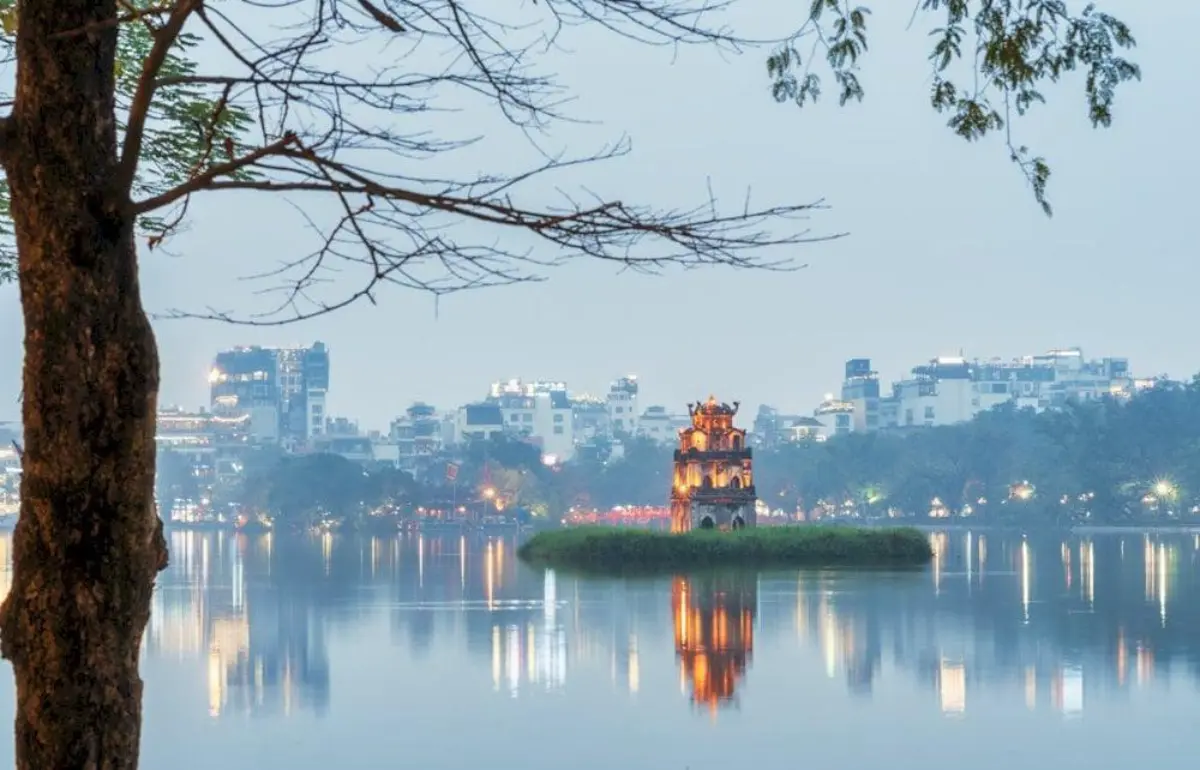
Hoan Kiem Lake
The symbolic heart of Hanoi — a small jade-green lake at the centre of the city. Ngoc Son Temple, the red Huc Bridge, Turtle Tower, and the morning tai chi scene.
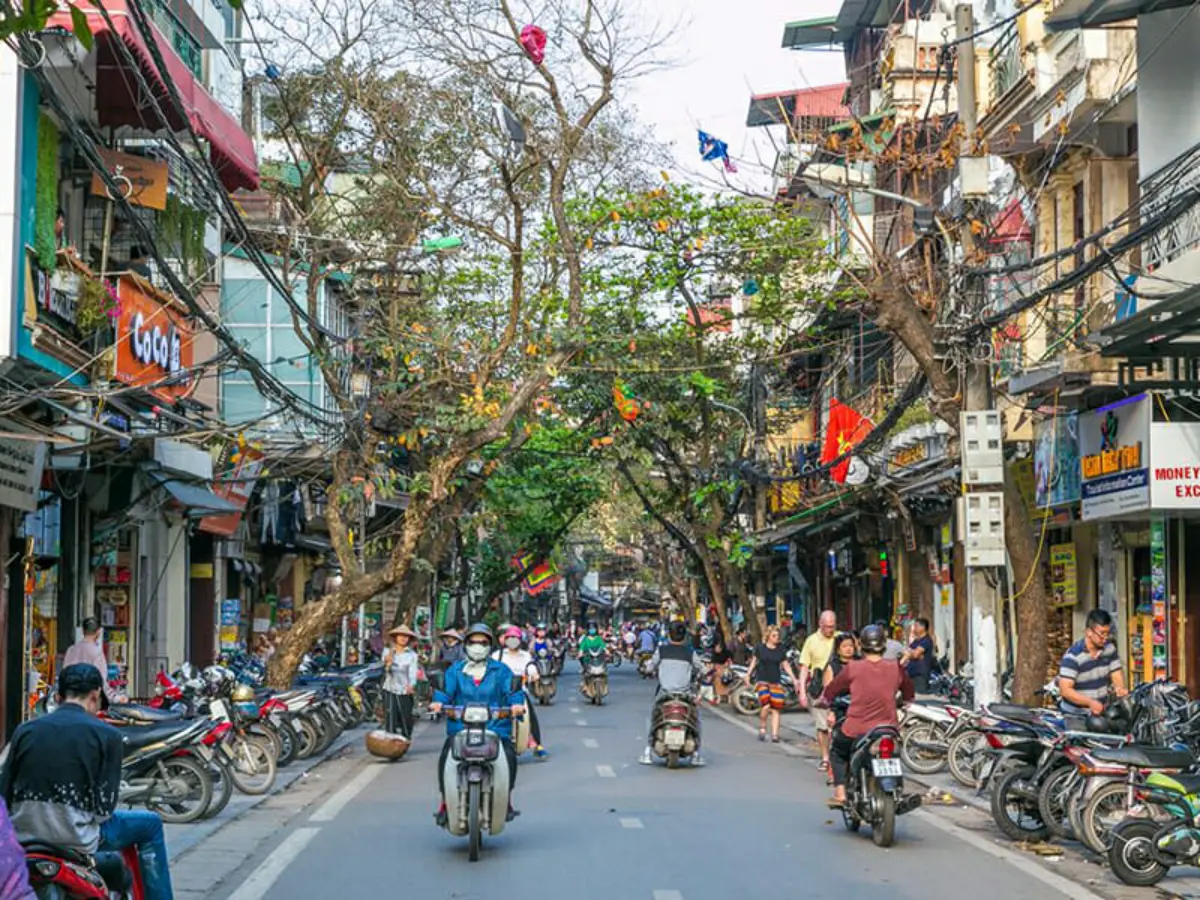
The Old Quarter
Hanoi’s historic commercial district — the 36 Streets, tube houses, craft lanes, Dong Xuan Market and the endless flow of street life that has defined the area for centuries.

Temple of Literature
Vietnam’s first university, founded in 1070. A series of courtyards, pavilions and stelae recording the names of scholars — one of Hanoi’s most beautifully preserved historic sites.

Ho Chi Minh Complex
The political and historic heart of modern Vietnam — the Ho Chi Minh Mausoleum, the Presidential Palace, Ho Chi Minh’s stilt house, the One Pillar Pagoda and the surrounding gardens.

West Lake & Tran Quoc Pagoda
Hanoi’s largest lake — lined with cafés, restaurants and embassies, and home to Tran Quoc Pagoda, the oldest Buddhist temple in the city. A peaceful contrast to the Old Quarter.
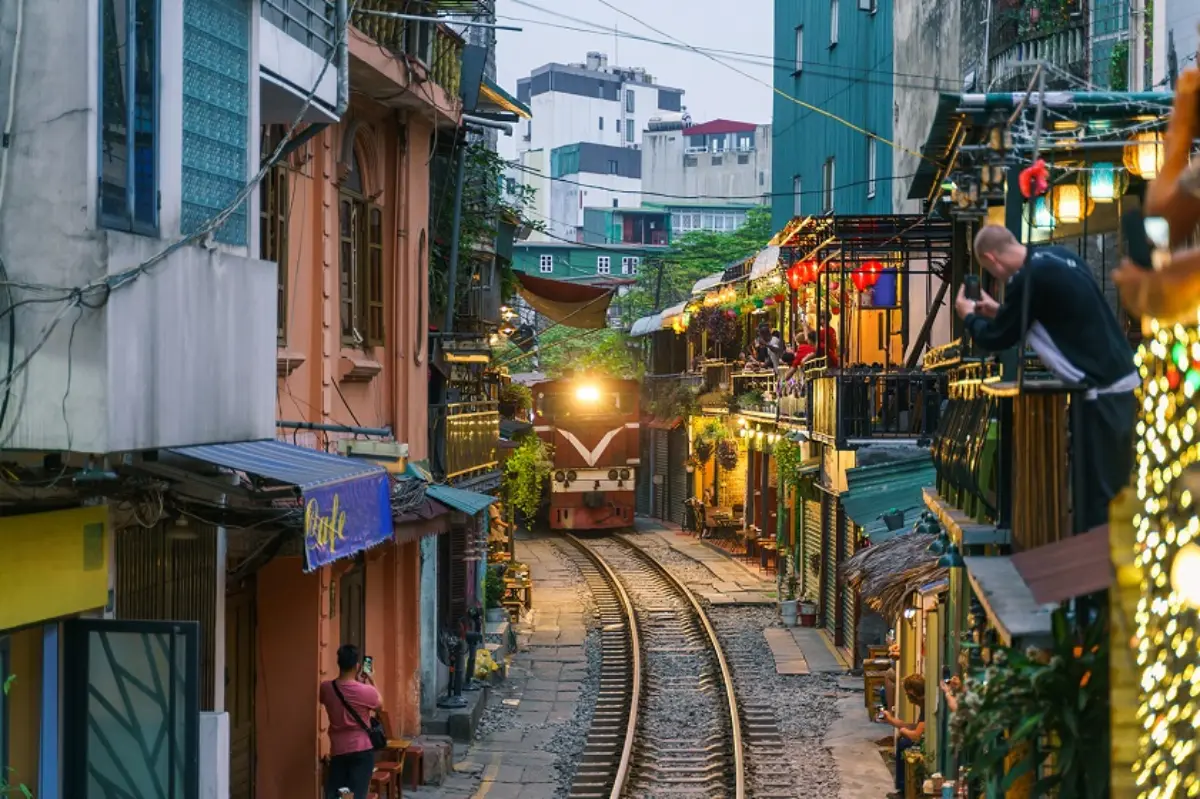
Hanoi Train Street
A narrow residential lane in the Old Quarter where a working railway line passes within inches of the houses and cafés. One of Hanoi’s most distinctive (and most photographed) experiences — with careful etiquette for visiting respectfully.

Long Bien Bridge & the Red River
A historic steel cantilever bridge built by the French in 1902, spanning the Red River east of the Old Quarter. The bridge and its surrounding riverside neighborhoods offer a quieter side of Hanoi.

Hanoi Opera House & the French Quarter
A grand colonial-era opera house built in 1911, modelled on the Palais Garnier in Paris. The surrounding French Quarter is Hanoi’s most European-feeling area — wide tree-lined boulevards, yellow villas and grand hotels.
When to visit Hanoi
Hanoi has a genuine winter, unlike southern Vietnam. Spring and autumn are the best seasons for most travelers — cool, dry and clear.
Mild, often beautiful. Cool mornings, warm afternoons, occasional light rain. One of the two best seasons for Hanoi. Some humidity and haze in March.
Hot, humid and often wet, with heavy rain and occasional storms. The city is livelier at night to escape the heat. Many travelers come through on their way to Halong Bay or the highlands.
Widely considered the best months. Clear skies, cooler temperatures, lower humidity. Beautiful light for photography. Book early — this is peak season.
Cool to cold, often misty. Atmospheric in a moody, film-like way — think grey skies, warm coffee, misty lakes. Pack proper layers for the northern winter.
Ways to experience Hanoi
City Highlights
Hanoi’s essential landmarks in a day or two — Hoan Kiem Lake, Old Quarter, Temple of Literature and the Ho Chi Minh Complex.
02Street Food & Coffee
Hanoi is one of Asia’s great food cities — phở, bún chả, bánh cuốn, egg coffee and beer hoi. Best explored with a guide who knows the streets.
03Culture & Heritage
Temples, museums, French colonial architecture and the living heritage of the Old Quarter — a slower, more contextual way to see Hanoi.
04Beyond the City
Halong Bay, Ninh Binh, Sapa, Mai Chau and Ha Giang — Hanoi is the gateway to every great destination in northern Vietnam.
Practical information
Getting around
Hanoi’s central districts are best explored on foot — the Old Quarter, Hoan Kiem Lake and the French Quarter are all within a 20–30 minute walk of each other.
For longer distances, Grab (Vietnam’s ride-hailing app) is reliable and inexpensive. Regular taxis are also plentiful. Cyclos (three-wheeled pedicabs) are a classic Hanoi experience — agree on the price first.
Good to know
- — Hanoi has a genuine winter — bring layers from November to March
- — Weekend evenings: streets around Hoan Kiem Lake close to traffic
- — Ho Chi Minh Mausoleum is closed Mondays and Fridays
- — Dress modestly for temples and the Mausoleum
- — Traffic is intense — cross the road slowly and steadily
Questions About Hanoi
How many days do I need in Hanoi?
As a guide: 2 days gives you the essentials — Hoan Kiem Lake, the Old Quarter, Temple of Literature and the Ho Chi Minh Complex. 3 days lets you slow down and add food tours, museums or the Water Puppet Theatre. 4–5 days allows a day trip to Halong Bay or Ninh Binh as well. Most travelers find that 3 days in Hanoi feels right.
What is the best area to stay in Hanoi?
For most travelers, the Old Quarter is the best base — central, atmospheric, close to the lake and the food scene. The Hoan Kiem District is slightly quieter with more cafés and colonial character. The French Quarter is more upscale, with larger hotels and wider streets. We recommend based on what you’re looking for; the areas are all within walking distance.
Is Hanoi safe for travelers?
Yes. Hanoi is generally very safe for international travelers, including solo travelers and families. Petty theft can occur in tourist areas, so normal precautions apply (keep valuables secure, watch your bag). Traffic is the more significant concern — cross roads slowly and steadily, without sudden movements.
What food should I try in Hanoi?
Hanoi is one of Asia’s great food cities. Don’t miss: phở (noodle soup — try it for breakfast), bún chả (grilled pork with noodles and herbs), bánh mì (the classic Vietnamese sandwich), bánh cuốn (steamed rice rolls), bún ốc (snail noodle soup), and egg coffee (cà phê trứng). Hanoians eat street food at all hours — a good guide will take you to the best stalls.
What is Train Street and should I visit?
Train Street is a narrow residential lane in the Old Quarter where a working railway line passes within inches of houses and cafés. It’s one of Hanoi’s most distinctive experiences — but it’s also a residential area, and access has been restricted at various times due to safety concerns. If you visit, follow your guide’s advice on timing, dress modestly, and stay clear of the tracks.
What day trips can I do from Hanoi?
Hanoi is the gateway to northern Vietnam. The most popular day trips are: Halong Bay (2.5–3 hours each way — often done as an overnight cruise rather than a day trip), Ninh Binh (2 hours — Trang An and Hoa Lu), Bat Trang ceramic village (30 minutes), Duong Lam ancient village (1.5 hours), and Mai Chau (3 hours). We can build any of these into a private itinerary.
Should I see the Water Puppet Theatre?
Yes — it’s a uniquely Vietnamese art form, and the Thang Long Water Puppet Theatre in Hanoi is the most famous venue. Shows are about 50 minutes, with live musicians and traditional wooden puppets performing on water. It’s worth doing once, especially for families. Book in advance during peak season.
Can I combine Hanoi with other parts of Vietnam?
Yes. Hanoi has direct flights to Da Nang and Hue in Central Vietnam (1 hour 15 minutes), to Saigon in the south (2 hours), and to Phu Quoc (2 hours). It also has direct flights to Luang Prabang and Vientiane in Laos, and to Siem Reap in Cambodia. A common route is Hanoi → Halong Bay → Central Vietnam → Saigon → Mekong Delta — the full north-to-south journey, typically 12–14 days.
Is Hanoi suitable for families?
Very much so. Hanoi is engaging and safe for children — the Water Puppet Theatre, cyclo rides, the lakes and markets all appeal to younger travelers. The Old Quarter is a wonderful place to explore together. We adjust pace and activities based on your family’s ages and interests.
Plan a private Hanoi journey.
Whether you want a short 2-day city break or a longer journey through northern Vietnam starting from Hanoi, our specialists will design a private itinerary around your dates and pace.
Start Planning →Local ground expertise in Hanoi.
If you’re building Hanoi programs for your clients, we can support you with local DMC services, Hanoi city guides, hotel partners, day trip logistics and confidential trade rates.
Visit the Trade Page →Hanoi, built around you.
Whether you’re drawn to the Old Quarter’s streets, Hoan Kiem Lake at dawn, or the temples and history of the city, our specialists will help you shape a private journey through Hanoi.