
Where modern Vietnam was made — and where it is still being made, one bowl of pho and one skyscraper at a time.
Ho Chi Minh City sits in southeastern Vietnam, about 1,700 kilometers south of Hanoi and a short drive from the Mekong Delta. Once known as Saigon, it is the country’s largest city and its economic and cultural powerhouse — the gateway to southern Vietnam and the natural starting point for journeys into the Delta, the beaches of Phu Quoc and Nha Trang, and the Central Highlands.
The city is also the site of pivotal Vietnam War history, including the Cu Chi Tunnels and the War Remnants Museum. Beyond its history, it is one of Southeast Asia’s most exciting destinations — French colonial landmarks beside gleaming modern towers, street vendors serving pho and banh mi alongside Michelin-listed kitchens, and an energy that is itself an experience.
Ho Chi Minh City at a glance
Ho Chi Minh City sits in southeastern Vietnam, about 1,700 km south of Hanoi, on the western bank of the Saigon River and about 50 km north of the Mekong Delta. It is the largest city in Vietnam and the country’s economic and cultural hub — the gateway to southern Vietnam and the wider Indochina region.
The city is famous for its French colonial landmarks, Vietnam War history, and one of the finest street food cultures in Southeast Asia. Most first-time visitors come for the War Remnants Museum, Independence Palace, Notre Dame Cathedral and the Central Post Office, then add a day trip to the Cu Chi Tunnels or the Mekong Delta. Three to four days is the ideal stay: two days for the central sights, three to four for the tunnels and the Delta.
The city has a tropical climate — warm year-round, with a dry season from December to April and a wet season from May to November. The currency is the Vietnamese Dong (VND), and small notes are essential for street food and markets. English is widely spoken in the tourism industry. Most nationalities need a visa; e-visas are available online.
Tan Son Nhat International Airport (SGN) is about 8 km from the city center. Taxis, Grab, shuttle buses, and private cars connect the airport to downtown in 20–40 minutes. Within the city, walking works well in the central wards; Grab and metered taxis handle everything else.
History of Ho Chi Minh City
Ho Chi Minh City’s history is one of transformation — from a small Khmer fishing village to a French colonial capital, to the capital of South Vietnam, and finally to the economic engine of a reunified Vietnam.
Early settlement. The area that is now Ho Chi Minh City was originally part of the Khmer Empire and known as Prey Nokor. Vietnamese settlers began arriving in the 17th century, and by the late 17th century the area had become an important Vietnamese settlement under the Nguyen lords.
Nguyen dynasty and French conquest. Under the Nguyen dynasty, Saigon grew as a commercial center. In 1859, French forces captured the city, and by 1862 it was formally ceded to France. Under French rule, Saigon became the capital of Cochinchina and was developed with wide boulevards, grand colonial buildings, and a modern port.
French colonial period. During the colonial period, Saigon was known as the “Pearl of the Far East.” Landmarks such as Notre Dame Cathedral, the Central Post Office, the Opera House, and the Hotel Continental were built during this era. The city became a major center of trade, administration, and culture.
Vietnam War and reunification. After Vietnam’s partition in 1954, Saigon became the capital of South Vietnam. The city was the center of the American war effort and the site of major political and military events. On April 30, 1975, North Vietnamese tanks entered the city, ending the war and reunifying Vietnam. Saigon was officially renamed Ho Chi Minh City in 1976.
Modern Ho Chi Minh City. Since the Doi Moi reforms of 1986, Ho Chi Minh City has transformed into Vietnam’s economic powerhouse. It is now the country’s financial and commercial center, home to the stock exchange, major banks, and international corporations. The city continues to grow rapidly, with new skyscrapers, metro lines, and residential developments reshaping the skyline.
The history you can’t skip
Four sites define a first visit to Saigon — two for the war, two for the colonial era that preceded it.
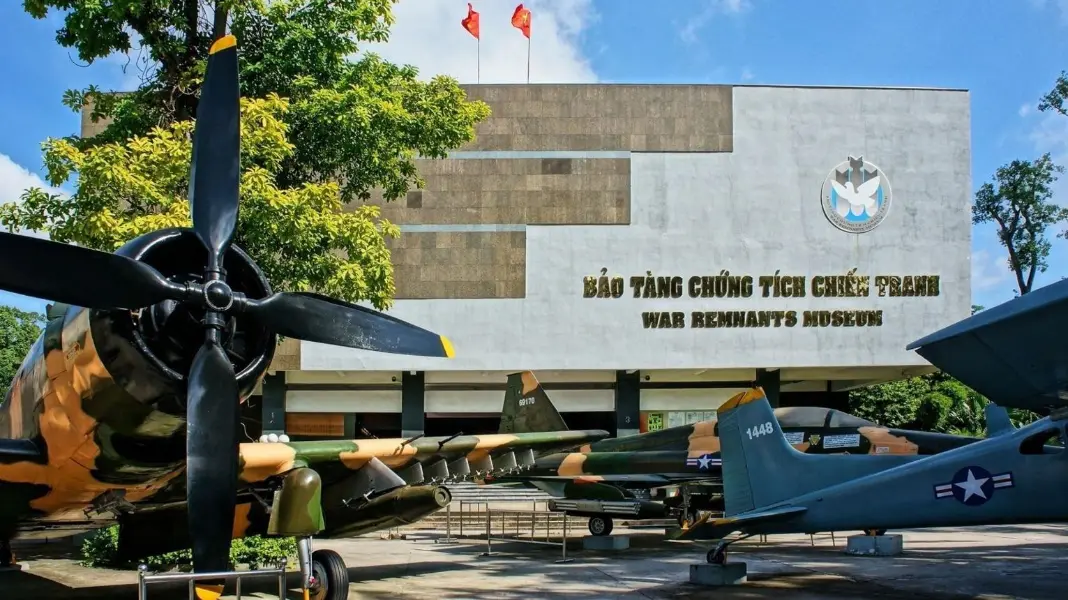
War Remnants Museum
The conflict from a Vietnamese perspective that most Western visitors have never encountered. Powerful, at times graphic, and one of the most important sites in the country.
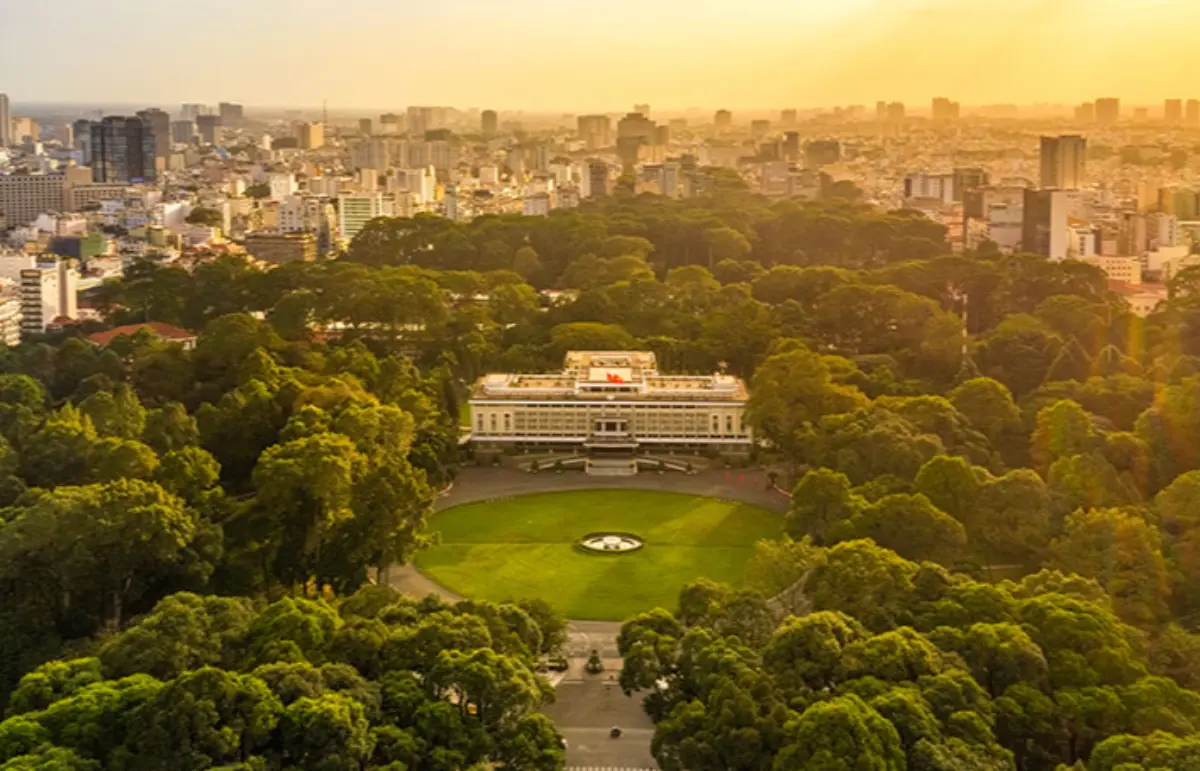
Independence Palace
Where the war officially ended on April 30, 1975, when a North Vietnamese tank crashed through its gates. The palace is preserved almost exactly as it was.
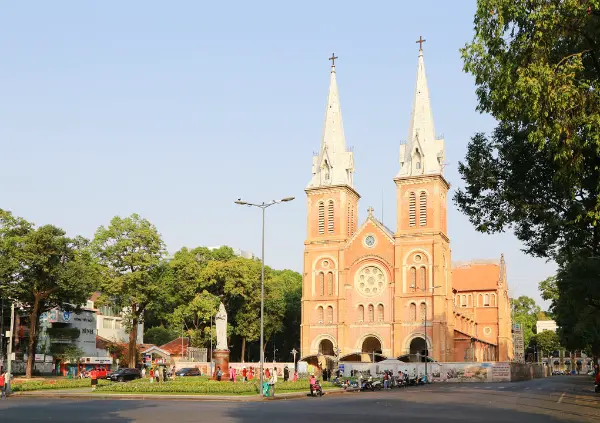
Notre Dame Cathedral & Central Post Office
The twin icons of French colonial Saigon, standing side by side. The cathedral, built between 1863 and 1880 with bricks imported from France, has two bell towers rising 58 meters.
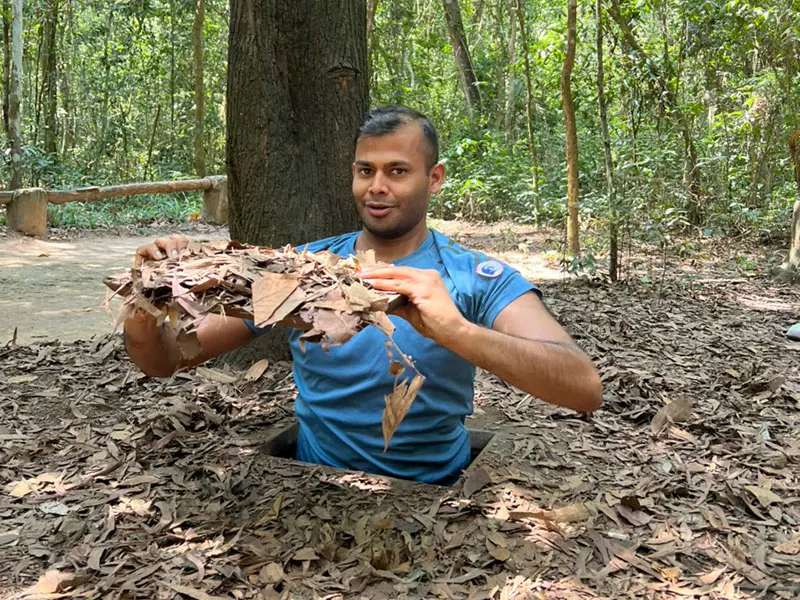
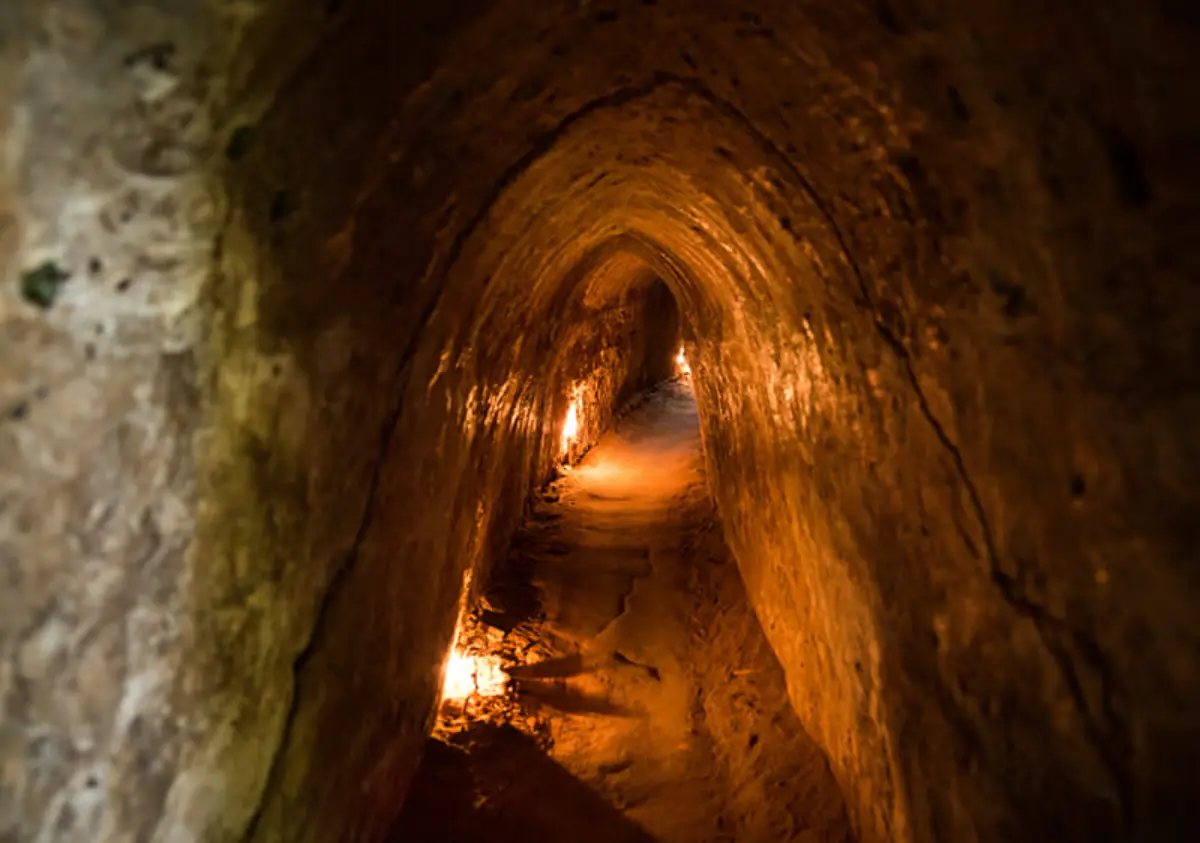
The Cu Chi Tunnels
A network of underground passageways 70 km northwest of the city that once stretched over 250 km — a complete underground city of living quarters, hospitals, kitchens and defenses.
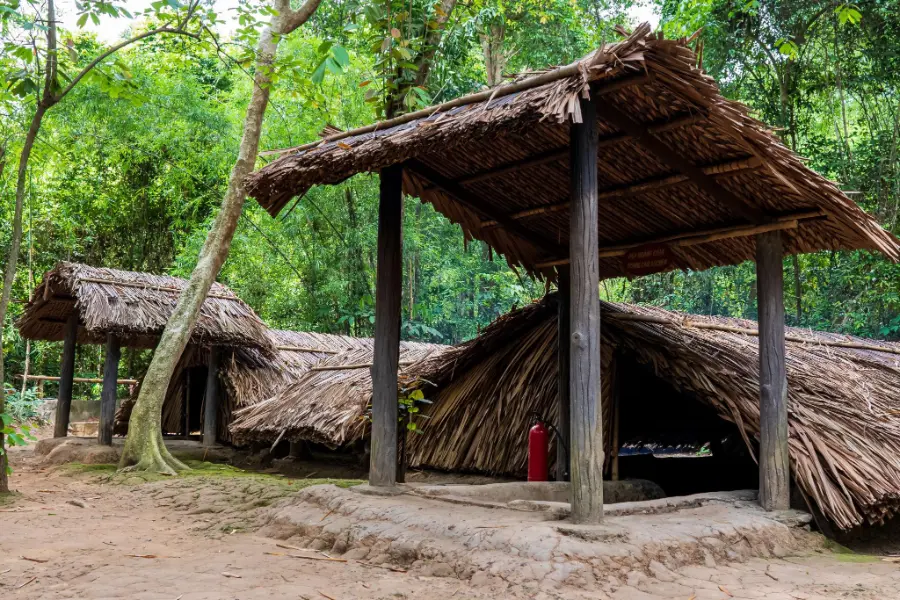
A Visceral Experience
The site does not soften the experience — sound effects simulating prisoner suffering, mannequins depicting interrogation scenes, and detailed displays of the booby traps used. Even the widened tourist section is genuinely claustrophobic.
Tours & Transport
Most travelers visit on an organized tour with hotel pickup, a guide, and sometimes stops at local workshops or a Cao Dai temple. The drive takes about two hours each way.
Half-Day or Full-Day
Cu Chi works as either a half-day morning trip or as a full day combined with the Cao Dai Temple at Tay Ninh. Half-day is the standard choice for most travelers.
Where to stay in Ho Chi Minh City
From July 1, 2025, Ho Chi Minh City abolished the district level and restructured into 168 wards, communes and one special zone. The old district names are no longer official, but the neighbourhoods themselves remain the same. These are the areas travellers actually choose between.
The historic and commercial heart of the city — War Remnants Museum, Independence Palace, Notre Dame, Central Post Office, Opera House and Dong Khoi. Most first-time visitors stay here. Walkable, well-served, close to the river.
The city’s backpacker and nightlife hub, built around Ben Thanh Market and Bui Vien Walking Street. Lively strip of bars, hostels and street food — popular with younger travelers.
A quieter, more residential area north of the centre. Home to Tan Dinh Market and several good cafés. A good base for travelers who want to be close but away from the tourist crowds.
Across the canal from the central wards, known for street food — particularly Vinh Khanh Street. A genuine local area with lower prices and a more authentic atmosphere.
The city’s Chinatown heritage area, centred on Binh Tay Market and the Thien Hau Temple. Chinese-Vietnamese heritage, traditional medicine shops, and some of the best dim sum in the city.
The city’s expatriate hub — international schools, Western-style cafés, and a quieter, greener atmosphere. Good for long stays, families and travelers who want a break from central Saigon.
Eating in Ho Chi Minh City
Food is the heart of the city. From a one-dollar bowl of pho eaten on a plastic stool to Michelin-listed tasting menus, Saigon has the broadest dining range in Vietnam.
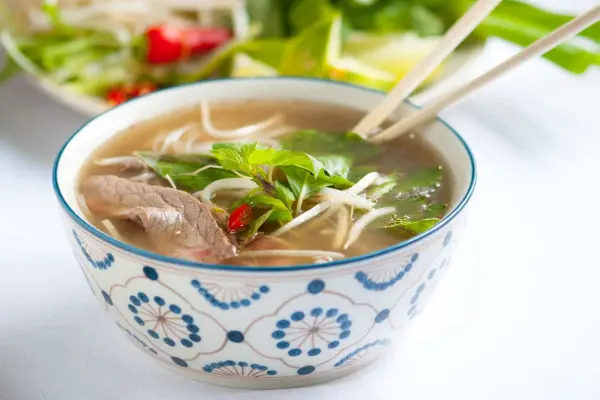
Pho
Vietnam’s most famous dish, eaten for breakfast, lunch or dinner. Saigon’s version uses a darker, sweeter broth than Hanoi’s, enriched with grilled onions and spices. Try it at Pho Hoa Pasteur or Pho 2000.
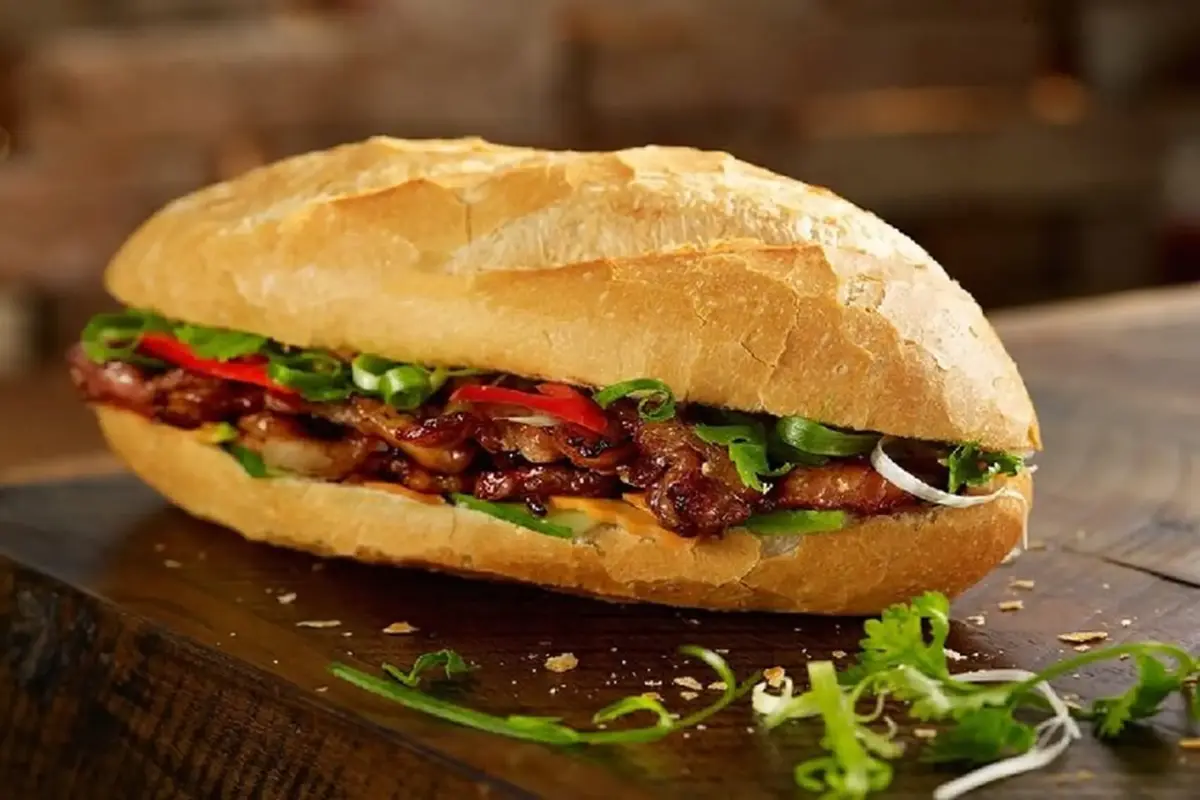
Banh Mi
The French baguette meets Vietnamese ingredients — pate, pickled vegetables, cilantro, chili, and your choice of grilled pork, chicken or sardines. The most convenient street food in the city.
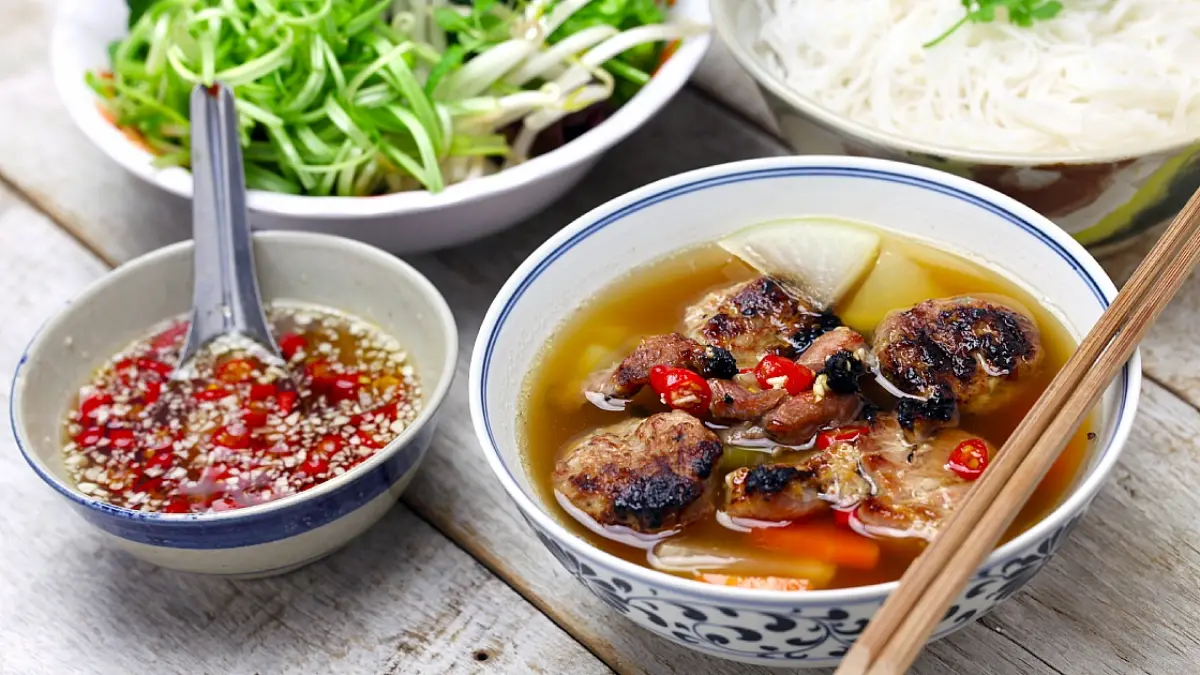
Com Tam & Banh Xeo
Com Tam — broken rice with grilled pork chop, egg meatloaf, pickled vegetables and fish sauce. Once a working-class dish, now Saigon’s comfort-food classic. Banh Xeo — a crispy turmeric crepe stuffed with shrimp, pork and bean sprouts.
The Mekong Delta
Vietnam’s rice bowl — a lush, watery landscape where the Mekong splits into a maze of channels before reaching the sea. One of the most rewarding day trips from the city.
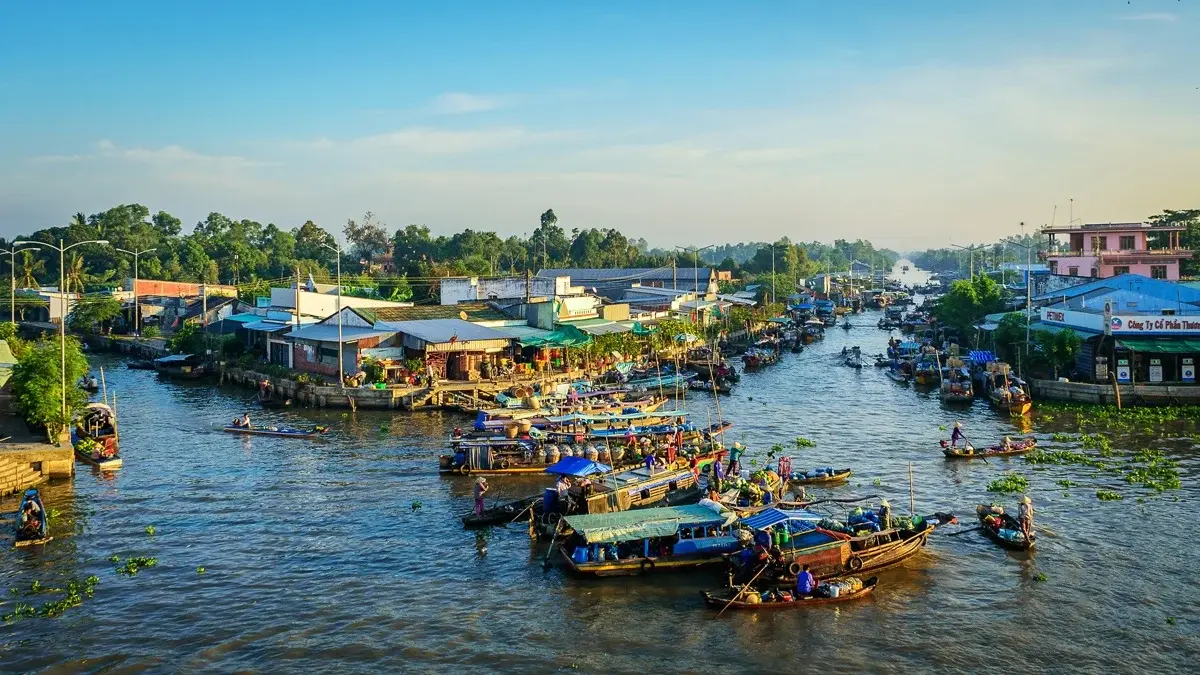
Floating Markets & Canals
Cai Be and Cai Rang are the two most famous floating markets, where vendors sell produce from boats laden with mangoes, pineapples and rice. Tours include sampan paddles along narrow canals and visits to family workshops.
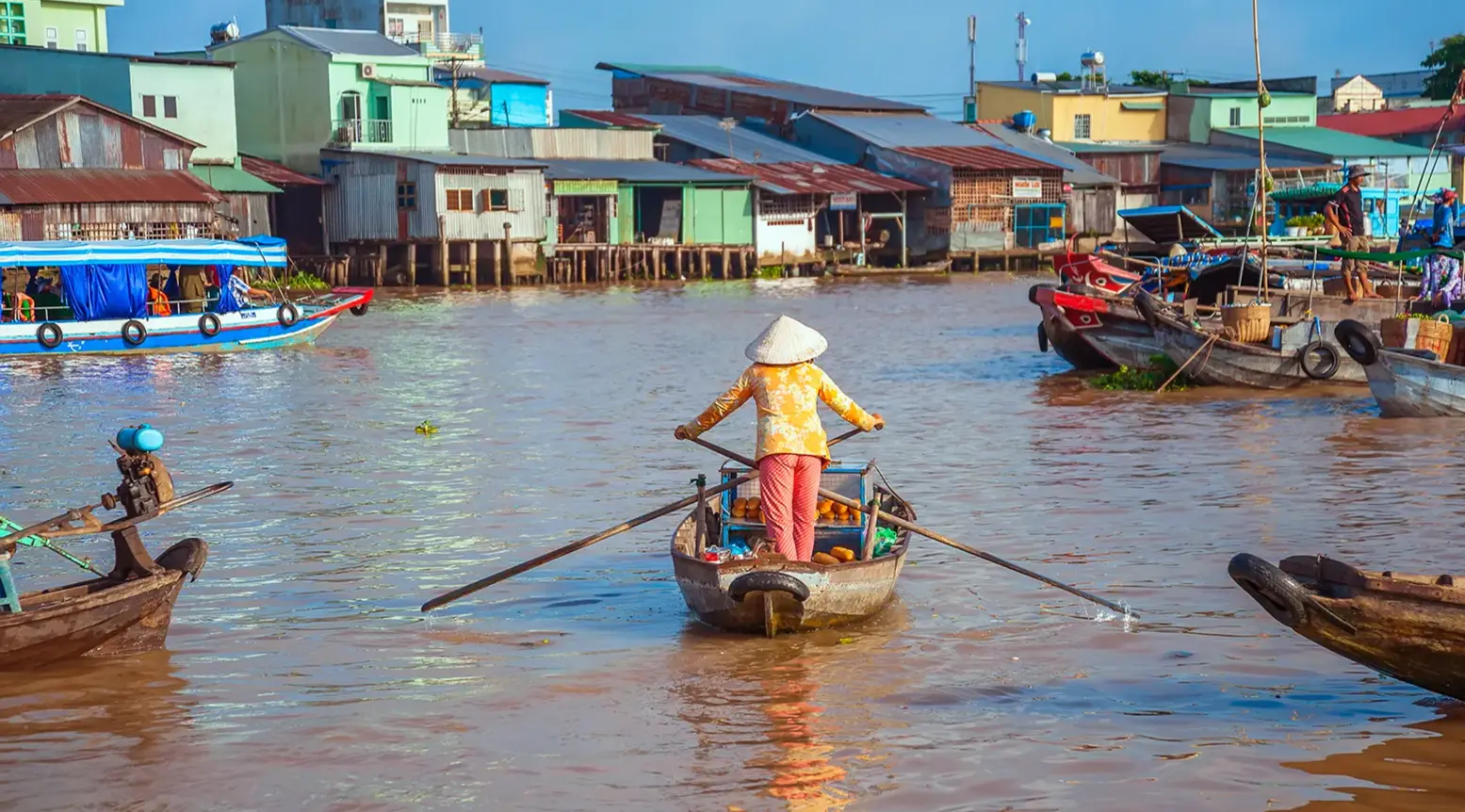
Day Trip or Overnight
Day trips are convenient but can feel rushed. For a deeper experience, spend at least one night in the delta — in Can Tho or Ben Tre — to see the region early in the morning before the tour buses arrive.
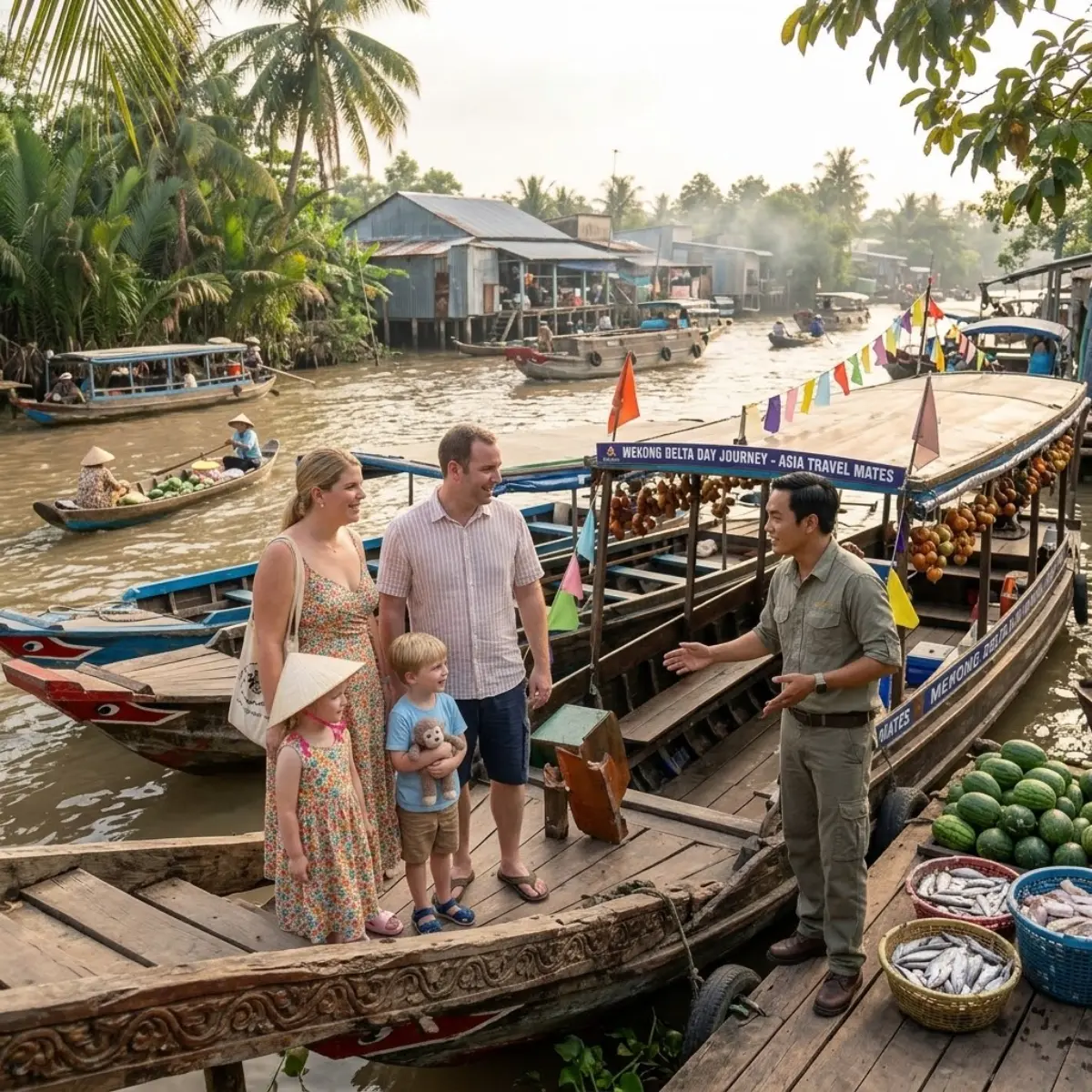
Extending the Journey
The Mekong Delta connects naturally with longer journeys — north to Phnom Penh by boat or road, south to Phu Quoc by ferry, or east back to Saigon. Some travellers travel straight through to Cambodia.
Best time to visit Ho Chi Minh City
There is no single best month — each season offers a different experience. The city has a tropical climate with a dry season from December to April and a wet season from May to November.
The most comfortable time to visit — less rain, lower humidity, clear skies. This is peak season, so expect higher prices and larger crowds at the major sights.
Short but intense afternoon showers, usually lasting an hour or two. The city remains visitable, and the rain often clears by evening. Low season, with lower prices and fewer crowds.
Late November and early December, and late April, offer a good balance of weather and value. Fewer crowds than the peak December–February window.
Vietnam’s most important holiday. Many shops and restaurants close, and prices rise. A fascinating time to visit if you plan ahead, but expect disruption to normal services.
How many days do you need?
The right length of stay depends on what you want from the city. The following are practical guidelines based on how travellers actually spend their time here.
War Remnants Museum, Independence Palace, Notre Dame Cathedral, Central Post Office, Ben Thanh Market, and a rooftop bar at sunset. Enough to see the essentials.
Add the Cu Chi Tunnels as a half-day or full-day trip, and a deeper exploration of the city’s food scene — Vinh Hoi Ward or Cho Lon in the evening.
Add a Mekong Delta day trip or an overnight in the delta, plus time for museums, cafés and shopping. This is the ideal minimum for a full Saigon visit.
Combine the city with the Mekong Delta and one nearby destination — Can Gio Mangrove Forest, a beach extension to Vung Tau, or a slower exploration of the delta.
Combine Ho Chi Minh City with the Mekong Delta, Phu Quoc or Nha Trang — or overland travel to Cambodia via the Mekong. A comfortable base for a full southern Vietnam trip.
Saigon combines naturally with Hanoi, Hoi An, Hue, the Mekong Delta, and the wider Indochina region — Cambodia by road or air, Laos by flight.
Practical information
Getting there & around
Tan Son Nhat International Airport (SGN) is about 8 km from the city center and Vietnam’s busiest airport. Taxis, Grab, shuttle buses and private cars connect the airport to downtown in 20–40 minutes. Metered taxis from Mai Linh and Vinasun are the safest option; avoid unlicensed taxis at the airport.
Within the city, walking works well in the central wards — most major sights cluster together. Grab is the most convenient option for everything else: transparent pricing, no haggling, cars and motorbike taxis available. For families and day trips, a private car with driver is comfortable and flexible. The metro (Line 1) has opened in phases — check current operations before relying on it.
Good to know
- — Visa: e-visa online for most nationalities — check official sources
- — Currency: Vietnamese Dong (VND) — carry small notes
- — Dress modestly at temples — shoulders and knees covered
- — Emergencies: Police 113 · Fire 114 · Ambulance 115
- — Travel insurance with medical evacuation strongly recommended
Where to go next
Ho Chi Minh City sits at the heart of southern Vietnam — the natural base for the Mekong Delta, the south coast beaches, and onward travel into Cambodia. These are the pages worth exploring next.
Southern Vietnam
Saigon, the Mekong Delta, Phu Quoc and the south coast — the region that Saigon anchors.
Explore Southern Vietnam → In the CityMarkets in Saigon
Ben Thanh, Binh Tay, Cho Lon, Tan Dinh and the night markets — where to shop and what to buy.
Explore Markets → In the CityBars in Saigon
Rooftop terraces, cocktail bars, hotel bars and late-night spots across District 1 and beyond.
Explore Bars → CountryVietnam
From the mountains of the north to the Mekong Delta — the full Vietnam destination guide.
Explore Vietnam →Questions About Ho Chi Minh City
Where is Ho Chi Minh City?
Ho Chi Minh City is in southeastern Vietnam, about 1,700 km south of Hanoi and 50 km north of the Mekong Delta, on the Saigon River. It is bordered by Tay Ninh and Binh Duong to the north, Dong Nai to the east, Ba Ria-Vung Tau to the southeast, Long An to the west, and Tien Giang to the southwest. Geographic coordinates are approximately 10.8231° N, 106.6297° E.
What is Ho Chi Minh City famous for?
Ho Chi Minh City is famous for its French colonial landmarks (Notre Dame Cathedral, Central Post Office, Opera House, Dong Khoi Street), its Vietnam War history (War Remnants Museum, Independence Palace, Cu Chi Tunnels), its street food scene — one of the finest in Southeast Asia — and as the gateway to the Mekong Delta.
How many days do you need in Ho Chi Minh City?
Three to four days is ideal. Two days covers the main central sights — War Remnants Museum, Independence Palace, Notre Dame Cathedral, Central Post Office, Ben Thanh Market. Three days adds the Cu Chi Tunnels. Four days adds a Mekong Delta day trip or overnight. Longer stays (5–7 days) allow for the Delta, a beach extension, or onward travel to Cambodia.
Is Ho Chi Minh City worth visiting?
Yes. Ho Chi Minh City is Vietnam’s largest and most dynamic city, with essential war history, exceptional food, and easy access to the Mekong Delta and the rest of southern Vietnam. Whether you are a first-time visitor to Vietnam, a cultural or history traveller, a food lover, a family, or a luxury traveller, the city works — and it combines naturally with Hanoi, Hoi An, the Mekong Delta, and the wider Indochina region.
How far is Cu Chi Tunnels from Ho Chi Minh City?
Cu Chi Tunnels are about 70 km northwest of the city center, roughly a two-hour drive each way. Most travelers visit on an organized half-day or full-day tour with hotel pickup. Speedboat transfers along the Saigon River are available for a more comfortable and scenic approach.
What is the best time to visit Ho Chi Minh City?
December to April offers the most comfortable weather with less rain, lower humidity, and clear skies — this is the dry season and peak travel period. The wet season from May to November brings short, intense afternoon showers that usually clear by evening; the city remains perfectly visitable with lower prices and fewer crowds. Late November and late April are good shoulder periods.
How do you get from the airport to the city?
Tan Son Nhat International Airport (SGN) is about 8 km from the city center. Taxis, Grab, shuttle buses, and private cars all connect the airport to downtown in 20–40 minutes depending on traffic. Metered taxis from Mai Linh and Vinasun are the safest option. Avoid unlicensed taxis that approach you in the arrivals hall.
Is Ho Chi Minh City suitable for families?
Yes, with planning. Shorter sightseeing days, pool time in between, private transport, and family-friendly hotels make the city manageable for families. Family-friendly activities include the Saigon Zoo and Botanical Gardens, Tao Dan Park, Ben Thanh Market, water puppet shows, and — with older children — the Cu Chi Tunnels and Mekong Delta day trips. Assess whether the War Remnants Museum is suitable for your children before visiting.
Can Ho Chi Minh City be combined with Cambodia or Laos?
Yes, on both counts. Ho Chi Minh City connects easily with Phnom Penh by road and air, and with Siem Reap by air — many travelers combine Vietnam and Cambodia on a single itinerary. Flights also connect Ho Chi Minh City with Luang Prabang and Vientiane in Laos, making multi-country Indochina journeys straightforward. The classic overland route is by boat or road from Chau Doc (Mekong Delta) to Phnom Penh.
Plan a Saigon journey with a specialist.
Every traveler experiences Saigon differently — some come for the wartime history, some for the food, and some simply to feel the pulse of a city that never slows down. Our specialists can shape an itinerary that fits the way you like to travel.
Start Planning →Saigon ground expertise, on the ground.
If you are building Saigon or southern Vietnam programs for your clients, we can support you with local DMC services, experienced regional guides, hotel and restaurant reservations, and confidential trade rates.
Visit the Trade Page →The city that never slows down.
Whether you have three days or three weeks, whether you are travelling solo, as a couple, with family, or with friends, we will help you build a journey through Saigon and the south that feels personal, unhurried, and true to the places you visit.