Battambang Travel Guide | Bamboo Train, Phnom Sampeau & Cambodia’s Arts Capital | Asia Travel Mates
Skip to main content
City · Arts Capital

Battambang: Cambodia’s arts capital.

Cambodia’s second city — where the Bamboo Train races through rice fields, millions of bats stream from Phnom Sampeau at dusk, and the country’s best-preserved colonial shophouses line the riverside streets.

Bamboo Train Phnom Sampeau Phare Circus Colonial Architecture Arts Scene
Location Northwestern Cambodia, about 80 km from Siem Reap
Known For Bamboo Train, Phnom Sampeau bat caves, colonial architecture
Getting There 3–4 hours by road from Siem Reap; 5–6 hours from Phnom Penh
Best Season November to February (cool and dry)
About the City

Cambodia without the crowds.

Battambang is what people mean when they say they want to see Cambodia without the crowds. It is the country’s second-largest city and its arts capital, with the finest surviving shophouse architecture in Cambodia and a real contemporary arts scene built around Phare Ponleu Selpak.

The riverside streets have the best-preserved French colonial and early-modern shophouses in the country — ochre walls, wooden shutters, and tiled roofs that survived the decades when other Cambodian towns were rebuilt. Out of town, the countryside is the attraction: bamboo train rides, hillside temples, fish paste and rice-paper workshops, and Phnom Sampeau, where a column of free-tailed bats pours out of a cliff cave every evening at dusk.

Battambang is a place for slow travel — for cycling through rice paddies, wandering art galleries, and eating well. It is not as flashy as Siem Reap or Phnom Penh, but way more chill and personal.

What to See & Do

Experiences in Battambang

From a bamboo platform on railway tracks to a circus that has trained Cambodia’s best performers — Battambang rewards curiosity.

The Bamboo Train (Norry) — Battambang's iconic countryside ride
01 · The Bamboo Train

The Norry

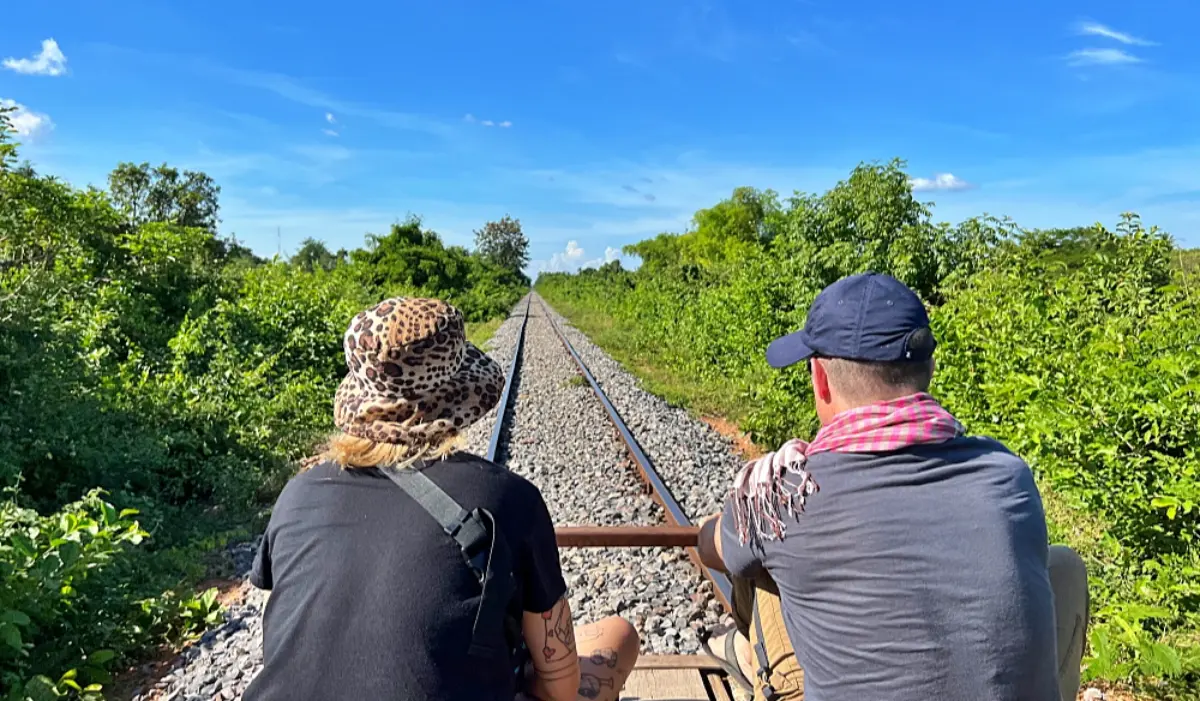
Ride the famous ‘Norry’ — a bamboo platform powered by a small engine, racing through rice fields at 30 km/h. It is bumpy, random, and ridiculously fun. Go to the original one at O Dambong for a more rustic experience.

Bamboo platform on railway tracks
Races through rice fields at 30 km/h
Original station at O Dambong
$10 for two people (plus tip)
Phnom Sampeau — bat cave exodus and Killing Caves
02 · Phnom Sampeau

Bat Cave Exodus

A dramatic limestone hill 12 km southwest of Battambang. At dusk, millions of free-tailed bats stream from a cliff cave in a long, undulating ribbon — one of Southeast Asia’s most spectacular natural displays. The Killing Caves here are a solemn Khmer Rouge memorial site.

Millions of bats at dusk (5:30–6 pm)
Killing Caves Khmer Rouge memorial
Reclining Buddha and skull memorial
12 km southwest of town
Phare Ponleu Selpak — Cambodia's original circus school
03 · Phare Ponleu Selpak

The Original Circus

Founded in 1994 by former refugee artists, this non-profit arts school trains young Cambodians in circus, visual arts, music, and theatre. Its evening circus performances are world-class and a direct way to support the local community.

Non-profit arts school since 1994
World-class acrobatics and theatre
Shows usually Mon, Thu, Sat
Check schedule online in advance
Wat Banan — the mini Angkor Wat near Battambang
04 · Wat Banan

Mini Angkor Wat

Often called ‘Mini Angkor Wat,’ this ancient temple sits atop a hill 20 km south of Battambang. Climb 358 stone steps to reach five ancient towers offering 360-degree views of the surrounding rice paddies.

358 stone steps to the summit
Five ancient towers
360-degree rice paddy views
20 km south of town
Wat Kor Heritage Village — traditional Khmer wooden houses
05 · Wat Kor Heritage Village

Traditional Khmer Houses

A village of traditional hardwood houses that survived the war, just 2 km from the city center. Walk through the quiet lanes, visit the ancient wooden homes, and see a side of Cambodian life that has changed little in generations.

Traditional hardwood houses
Survived the war years
2 km from city center
Quiet, authentic village life
Colonial architecture and arts scene in Battambang
06 · City & Arts

Colonial Shophouses & Galleries

Battambang has the best-preserved French colonial and early-modern shophouses in Cambodia, especially along Street 2½ and the riverfront. The city’s growing arts scene includes Romcheik 5 Art Space and street-art murals.

Best-preserved shophouses in Cambodia
Street 2½ and the riverfront
Romcheik 5 Art Space
Street-art murals
Visiting

Best time to visit Battambang

The city has a tropical monsoon climate, warm and humid year-round. The dry season is best for outdoor activities.

November – February Cool & Dry · Best Overall

The most comfortable weather with cooler temperatures, lower humidity, and clear skies. Ideal for the Bamboo Train, Phnom Sampeau, and cycling.

March – May Hot & Dry

Temperatures rise, especially in the lowlands. Early mornings and late afternoons are best. Fewer crowds and good conditions for temple visits.

June – October Green Season · Rainy

Lush landscapes, greener countryside, and fewer tourists. The rice is high from August to October. Some rural roads may become muddy.

Practical

Practical information

Getting There

From Siem Reap, it is about 3 hours by road or a seasonal boat service. From Phnom Penh, it is about 5–6 hours by bus or private car.

Getting Around

Tuk-tuks are the most flexible way to explore, with a full day costing around $15–20. Bicycles and motorbikes are also available for rent. Most sites are within 20 km of town.

What to Bring

Cash (many spots are cash-only), sunscreen, comfortable walking shoes, and a light jacket for evenings. Bring a hat for temple visits.

Where to Stay

Battambang has a range of guesthouses, boutique hotels, and riverside resorts. The Sanctuary Villa is a popular mid-range option with a pool and free station transfers.

Good to know

  • Ride the Bamboo Train in the morning (8–11 am) to avoid crowds
  • Arrive at Phnom Sampeau by 4:30 pm to hike before the bats emerge
  • Check the Phare Ponleu Selpak schedule online — shows are not every night
  • Wear respectful clothing at the Killing Caves and temples
  • Bring small cash — many sites and tuk-tuks are cash-only
  • Hire a driver for a half-day countryside loop — the villages between sites are the point
Traveler Profile

Who will enjoy Battambang?

Slow Travelers

Battambang rewards those who linger — cycling through rice paddies, wandering art galleries, and eating well. It is Cambodia at a gentler pace.

Art & Culture Enthusiasts

Phare Ponleu Selpak, Romcheik 5 Art Space, and the best-preserved colonial architecture in Cambodia make Battambang the country’s cultural capital.

Adventure Travelers

The Bamboo Train, Phnom Sampeau bat caves, and Wat Banan’s 358 steps offer plenty of adventure without the crowds of Siem Reap.

Frequently Asked

Questions About Battambang

Where is Battambang?

Battambang is in northwestern Cambodia, about 80 km from Siem Reap and 292 km from Phnom Penh. It is Cambodia’s second-largest city and the capital of Battambang Province.

What is Battambang famous for?

Battambang is famous for the Bamboo Train (Norry), the bat cave exodus at Phnom Sampeau, the Phare Ponleu Selpak circus, and the best-preserved French colonial shophouse architecture in Cambodia.

How many days do you need in Battambang?

Two to three days is ideal. One day covers the Bamboo Train and Phnom Sampeau bat caves; three days allows deeper exploration of the countryside, Wat Banan, and the arts scene.

How do I get to Battambang?

From Siem Reap, it is about 3 hours by road or a seasonal boat service. From Phnom Penh, it is about 5–6 hours by bus or private car.

What is the best time to visit Battambang?

November to February offers the most comfortable weather with cooler temperatures and clear skies. The countryside is greenest from August to October.

What are the best things to do in Battambang?

Top activities include riding the Bamboo Train, watching the bat exodus at Phnom Sampeau, visiting the Killing Caves, seeing a Phare Ponleu Selpak circus show, climbing Wat Banan, and exploring the colonial architecture and art galleries.

Local Knowledge

Tips for visiting Battambang

  • Ride the Bamboo Train in the morning (8–11 am) to avoid crowds
  • Arrive at Phnom Sampeau by 4:30 pm to hike before the bats emerge
  • Check the Phare Ponleu Selpak schedule online — shows are not every night
  • Wear respectful clothing at the Killing Caves and temples
  • Bring small cash — many sites and tuk-tuks are cash-only
  • Hire a driver for a half-day countryside loop — the villages between sites are the point
  • Allow time to wander — Battambang is a city to absorb, not tick off

Plan your visit

For Travelers

Experience Battambang.

Whether you’re planning a slow cultural escape, an arts-focused journey, or a break from Cambodia’s temple crowds, our specialists can help you build the right trip.

Start Planning →
For Travel Professionals

Cambodia northwest expertise, on the ground.

If you are building Cambodia programs that include Battambang, we can support you with local DMC services, vetted guides, and confidential trade rates.

Visit the Trade Page →
Battambang

Cambodia’s arts capital.

Bamboo trains through rice fields, bats streaming from a cliff cave at dusk, and the best-preserved colonial shophouses in the country — Battambang keeps it real, and that’s what makes it awesome.