
A landlocked country, a wide river, and a way of travelling that refuses to be rushed.
Laos — officially the Lao People’s Democratic Republic — is the only landlocked country in Southeast Asia. It sits between Vietnam to the east, Cambodia to the south, Thailand to the west, and China and Myanmar to the north. Its spine is the Mekong, which runs almost the entire length of the country and defines its geography, its agriculture, and much of its daily life.
What makes Laos distinctive in the region is its tempo. Compared to Vietnam’s intensity or Cambodia’s heat, Laos is quiet — fewer cars, fewer crowds, and a culture that still moves to its own rhythm. This is not a country to rush through; it is a country to slow down in.
What Laos is
Laos is a country of roughly 7.5 million people, spread across a land area about the size of the United Kingdom but with a population density closer to that of New Zealand. Most of the country is mountainous or forested, and much of its population lives along the Mekong River valley or on the fertile plateau in the south.
Historically, Laos was the kingdom of Lan Xang — “the kingdom of a million elephants” — which flourished from the 14th to the 18th century and left behind the country’s most important cultural sites, including Luang Prabang and the temples of Vientiane. In the 19th century, Laos became part of French Indochina, and colonial-era architecture and cuisine still shape the towns today.
The 20th century brought war, revolution and decades of relative isolation. Since the 1990s Laos has gradually opened to tourism, and today it receives far fewer visitors than its neighbours — which is exactly why many travellers consider it the region’s most rewarding destination. The infrastructure is lighter, the crowds are thinner, and the country still feels genuinely undiscovered in places.
Theravada Buddhism shapes daily life across Laos. You will see it in the monks who walk the streets of Luang Prabang at dawn, in the temple courtyards at the centre of every town, and in the country’s festival calendar, which is built around Buddhist observances and the rice-growing season. Travellers are welcome to observe these traditions — respectfully, and from a distance.
Destinations in Laos
Laos is compact but varied — from the temple town of Luang Prabang in the north to the river islands of the far south. These are the six destinations that shape a first visit.
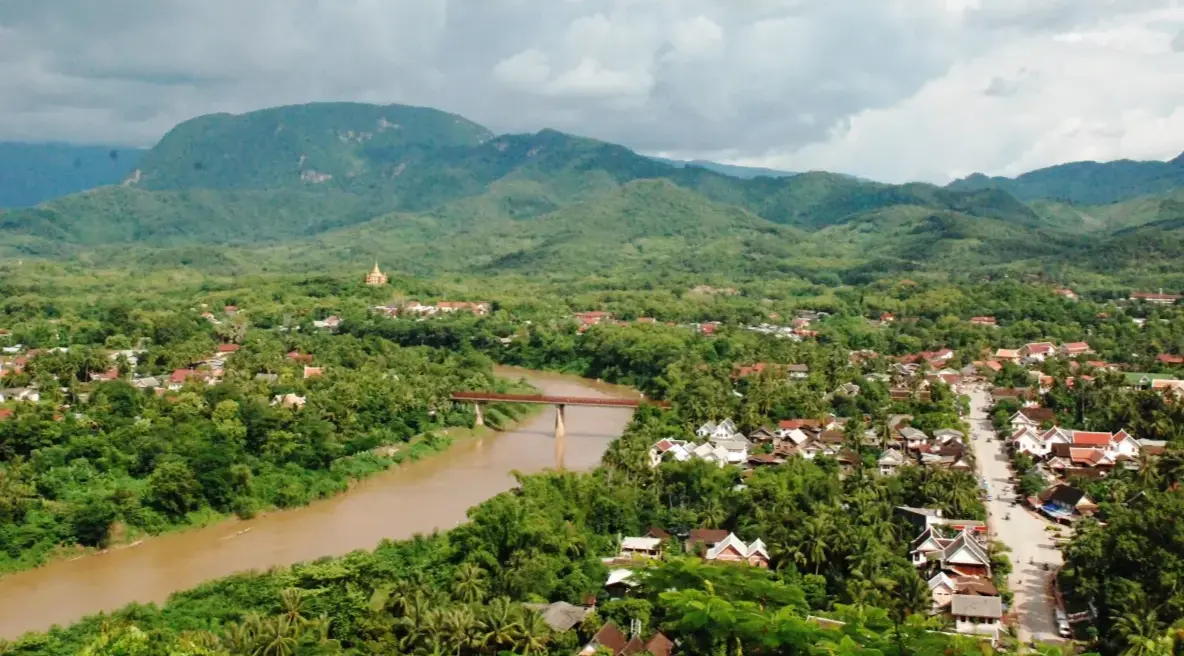
Luang Prabang
The old royal capital and the single most beautiful town in Laos — a UNESCO World Heritage site where temple roofs, colonial villas and the Mekong come together in a way no other town in the region manages.
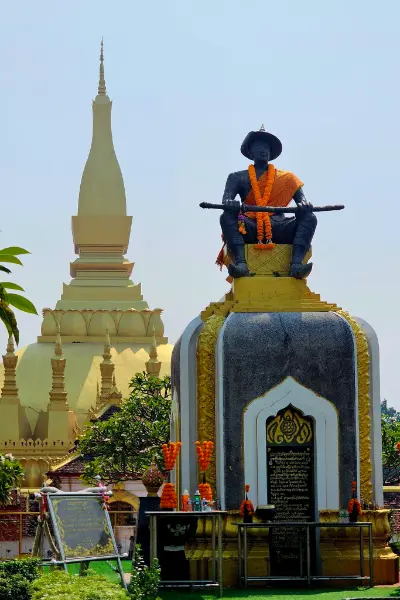
Vientiane
One of the smallest capital cities in Southeast Asia — closer to a large town than a metropolis. Vientiane is home to Pha That Luang, the national symbol of Laos, and a laid-back riverside atmosphere.
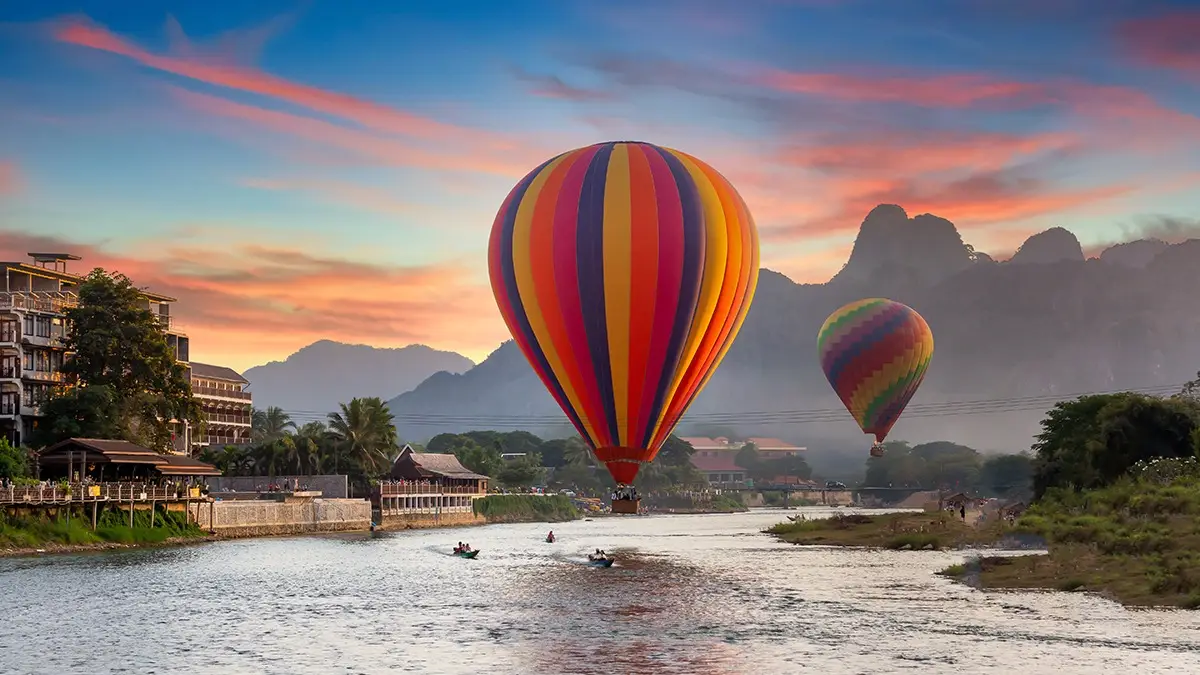
Vang Vieng
A small town on the Nam Song River surrounded by dramatic limestone karst. Once known mainly for river tubing, it has become a base for ballooning, kayaking, caves and hiking in the surrounding countryside.
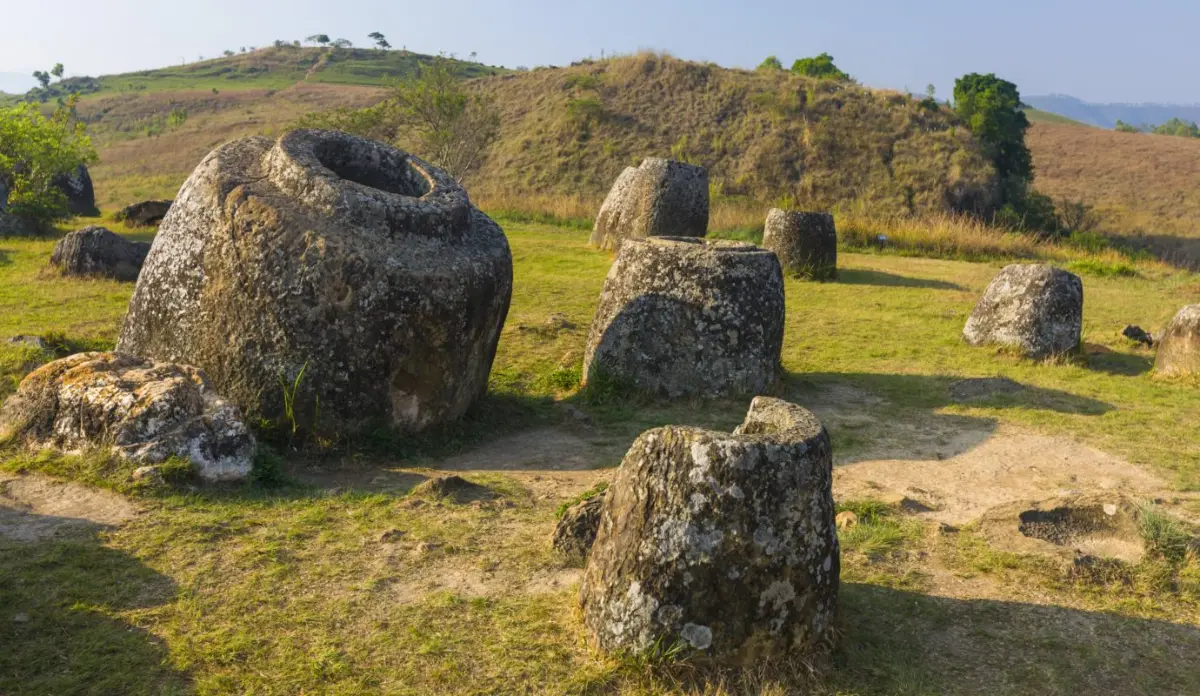
Plain of Jars
A plateau in central Laos scattered with thousands of stone jars, some up to three metres tall. Their origin and purpose remain uncertain — the site is one of the most unusual archaeological landscapes in Southeast Asia.
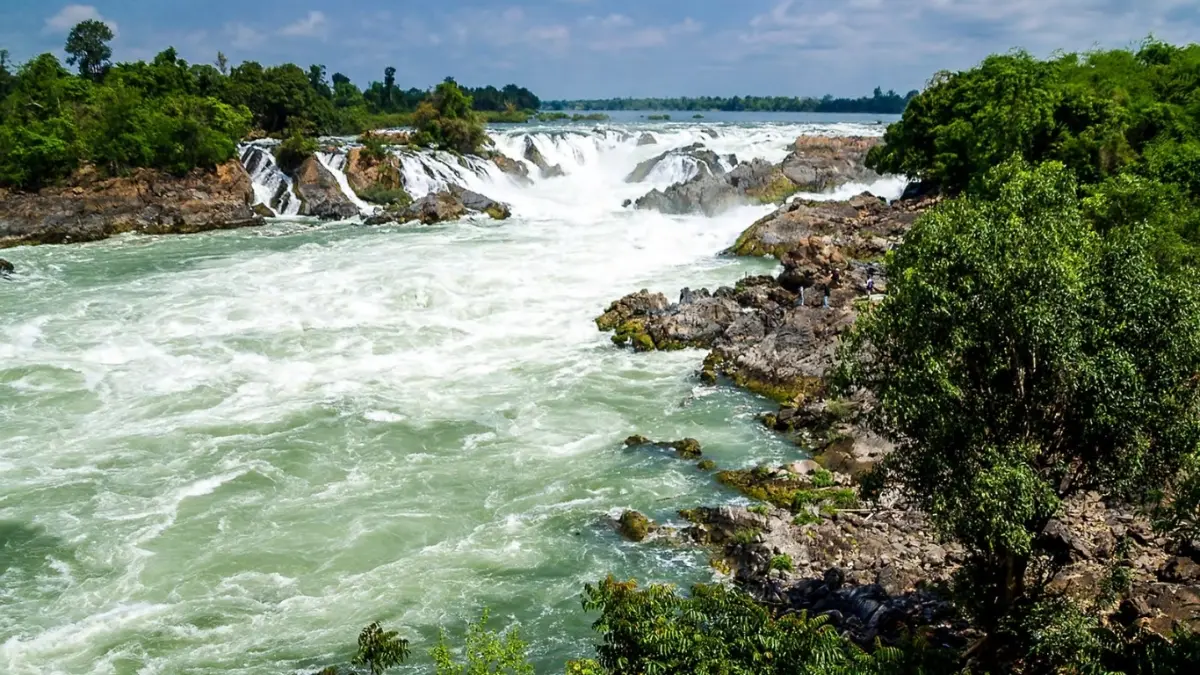
Si Phan Don (4,000 Islands)
In the far south, where the Mekong widens to its greatest extent before crossing into Cambodia, the river breaks into thousands of islands and islets. The pace of life here is the slowest in Laos.

The Mekong Slow Boat
The classic Laos journey — a two-day slow boat between Huay Xai on the Thai border and Luang Prabang, travelling with locals, cargo and the current. Slower than the bus, and the best two days you will spend in the country.
Laos, element by element
Six threads that run through Laos and make it distinct from its neighbours in the region.
Temples, monks and the alms round shape daily life across the country. The morning alms-giving in Luang Prabang is the most visible expression — and the most quietly moving.
The river runs almost the entire length of Laos and defines the country — its agriculture, its transport, its fishing, and the rhythm of life in every riverside town.
Colonial villas, baguettes and coffee survive in Luang Prabang and Vientiane from the French Indochina period — visible, but never overwhelming the Lao character of either town.
Laos is a sticky-rice culture — khao niaw is eaten by hand at almost every meal, alongside laap, tam mak hoong and grilled meats. It is one of the most distinctive cuisines in Southeast Asia.
Handwoven silk and cotton are still produced in villages across Laos, particularly in the north. The patterns and techniques vary from one ethnic group to another — and are worth seeking out.
Laos is the quietest country in Southeast Asia — fewer cars, fewer people, and a culture that does not rush. It is the main reason many travellers consider it the region’s most rewarding destination.
When to visit Laos
Laos has a tropical monsoon climate with three fairly distinct seasons. It is cooler than its neighbours at higher elevations, and much of the country sees noticeably less rain than coastal Vietnam or Cambodia.
The cool, dry season — the most comfortable time to visit, and the busiest. Days are warm, nights are cool (cold in the northern mountains), and skies are clear. Book accommodation in advance in Luang Prabang.
The hottest months before the rains. Temperatures rise sharply, and in March–April agricultural burning often produces thick smoke across much of the north. Air quality can be poor; check conditions if you are sensitive.
The southwest monsoon brings heavy rain and dramatic green landscapes. Travel is cheaper and quieter, but some roads — especially in the north — become difficult or impassable. River levels rise, which can affect boat schedules.
The far north (Luang Namtha, Phongsali) is significantly cooler than Vientiane year-round. The far south (Si Phan Don) is warmer and drier. Plan accordingly — the country spans several climate zones.
How long do you need?
Laos is often squeezed into a few days on a wider Southeast Asia trip — which misses the point. Realistically, a week is the minimum, two weeks is comfortable, and anything more rewards slowing down further.
The most common Laos introduction — a full week in Luang Prabang, with day trips to Kuang Si Falls and the Pak Ou caves. Comfortable rather than rushed.
Luang Prabang plus the north — Vang Vieng, or a few days in the far north around Luang Namtha and Nong Khiaw. Plenty of time for river travel and slow days.
The most popular window — Luang Prabang, Vang Vieng, Vientiane and a flight south to Si Phan Don. Comfortable pacing with a little slack built in.
Adds the Plain of Jars, the far north (Luang Namtha, Muang La, Nong Khiaw) and the Bolaven Plateau in the south. For travellers who want to see the whole country.
Laos combines naturally with northern Vietnam (via the China–Laos railway or the Huay Xai crossing) or with northern Thailand. It is the quietest leg of any Indochina itinerary.
Whichever length you choose, do not over-schedule. Laos rewards long, unstructured days — a slow boat, a café by the river, an afternoon at a temple with no agenda.
Practical information
Getting around Laos
Laos is connected by a mix of flights, buses, minivans and — the classic option — river boats on the Mekong. Domestic flights link Vientiane, Luang Prabang, Pakse and a handful of other towns, but most overland routes are slow and mountainous.
The China–Laos Railway, opened in 2021, has transformed travel between Vientiane, Vang Vieng and Luang Prabang — cutting journeys that once took a full day to a few hours. Book in advance, especially in high season. Roads in the north can be slow and winding; allow more time than the map suggests.
Good to know
- — Visas are available on arrival for many nationalities — check current rules
- — The Lao kip is the local currency; Thai baht and US dollars are sometimes accepted
- — Dress modestly at temples; shoulders and knees covered
- — Do not touch monks or hand them items directly — especially women
- — Travel insurance covering medical evacuation is strongly recommended
Where to go next
Laos is part of the wider Indochina region, alongside Vietnam and Cambodia. These are the neighbouring destinations and regional pages worth exploring next.
Vietnam
Denser, faster and more varied — the eastern neighbour, connected to Laos by land and by the China–Laos railway.
Explore Vietnam → NeighbourCambodia
South of Laos, and reached by crossing the Mekong at Si Phan Don. Home to Angkor and a warmer, flatter landscape.
Explore Cambodia → RegionIndochina
The wider region — Vietnam, Cambodia and Laos together, and the best way to understand how they connect.
Explore Indochina → Broader RegionAll Destinations
Browse every destination we cover across Southeast Asia — countries, regions, cities and specific places.
Browse All Destinations →Questions About Laos
Is Laos worth visiting?
Yes — and many travellers who visit all three Indochina countries rate Laos the highest. It is quieter, less developed for tourism, and more rewarding for travellers who value slow travel over tick-box sightseeing. The main destinations — Luang Prabang, the Mekong, Vang Vieng, Si Phan Don — are genuinely distinctive, and the pace of the country is unlike anywhere else in the region.
How many days do you need in Laos?
One week is the minimum for a single destination — usually Luang Prabang and its surroundings. Two weeks is the standard window for a fuller trip that includes Vang Vieng, Vientiane and a southern destination. Three weeks lets you see the whole country, including the Plain of Jars in the centre and the far north or the Bolaven Plateau in the south. Less than a week in Laos is usually not worth the flights.
What is the best time of year to visit Laos?
The cool, dry season from November to February is the best time to visit — comfortable temperatures, clear skies, and dry roads. March to May is hot and often smoky, particularly in the north, due to agricultural burning. The monsoon runs from June to October, bringing heavy rain, cheaper travel and greener landscapes — but some roads become difficult, especially in the north.
Do I need a visa for Laos?
Many nationalities can obtain a visa on arrival at Vientiane, Luang Prabang and Pakse airports, as well as at most land border crossings. Other nationalities need to apply in advance at a Lao embassy or consulate, or use the e-visa system. Rules change periodically — check the current requirements for your nationality before you travel, and confirm with your specialist or the nearest Lao embassy.
What is the Mekong slow boat, and should I take it?
The slow boat is a two-day journey along the Mekong between Huay Xai on the Thai border and Luang Prabang, with an overnight stop in Pakbeng. It is slower than the bus but far more scenic, and it is one of the classic travel experiences in Southeast Asia. It is not for everyone — the boats are basic, the days are long, and comfort is limited — but for travellers who want to see the river as it has always been travelled, it is worth the time.
Is Luang Prabang better than Vientiane?
For most travellers, yes — Luang Prabang is the cultural highlight of Laos, and Vientiane is a quieter, smaller capital that works best as a two- or three-day stop. Luang Prabang has the UNESCO heritage old town, the temples, the alms-giving, the Mekong, and easy access to Kuang Si Falls and Pak Ou caves. Vientiane has Pha That Luang and a relaxed riverside atmosphere — worth a short visit, but not the reason most people come to Laos.
What food should I try in Laos?
Laos has one of the most distinctive cuisines in Southeast Asia. The staples are khao niaw (sticky rice, eaten by hand), laap (a minced-meat salad with herbs and lime), tam mak hoong (green papaya salad, similar to Thai som tam but often stronger), and grilled meats and river fish. In Luang Prabang, look for or lam (a slow-cooked stew with aubergine and wood-ear mushroom), and try the local coffee — Laos produces some of the best beans in the region.
Is Laos suitable for families or first-time travellers to Asia?
Yes, with some caveats. Laos is safe, welcoming and generally easy to navigate — English is spoken in the tourism industry, accommodation and food are accessible, and the pace is gentle. The main considerations are heat, road travel times, and the basic infrastructure outside the main tourist centres. Travelling with a specialist is a good option for a first trip to Asia or for families with younger children, particularly if you want to combine Laos with a neighbouring country.
Plan a Laos journey with a specialist.
Laos rewards the right pacing. Our specialists can design a Laos itinerary around your interests and schedule — from a week in Luang Prabang to a full loop through the country.
Start Planning →Local ground expertise in Laos.
If you are building Laos programs for your clients, we can support you with local DMC services, experienced Lao guides, river and rail logistics, and confidential trade rates.
Visit the Trade Page →The slowest country in Southeast Asia.
Whether you want a week in Luang Prabang or a full journey along the Mekong, our specialists can help you build a Laos itinerary that respects the pace of the country.