Phong Nha Travel Guide | Vietnam’s Cave Kingdom | Asia Travel Mates
VIETNAM · NORTH CENTRAL COAST · PHONG NHA For travelers & travel professionals · Plan a journey →
Cave Country · Quang Binh Province

Phong Nha: the kingdom beneath.

Phong Nha is Vietnam’s cave capital — a UNESCO World Heritage landscape of limestone mountains, underground rivers, and jungle valleys in Quang Binh Province, home to the largest known cave passage on Earth.

Caves & Karst UNESCO Heritage Trekking & Camping National Park
About Phong Nha

A landscape carved over hundreds of millions of years.

Phong Nha-Ke Bang National Park lies in Quang Binh Province, on Vietnam’s North Central Coast about 500 km south of Hanoi. It protects one of the oldest and largest karst regions in Asia — a plateau of limestone riddled with caves, sinkholes, and underground rivers that has been forming for roughly 400 million years.

The park was inscribed as a UNESCO World Heritage Site in 2003 for its geological value, and extended in 2015. It is also ecologically rich, with primary forest and rare species including the Hatinh langur and the Saola.

Location Quang Binh Province, North Central Coast, Vietnam
Status UNESCO World Heritage Site (2003, extended 2015)
Gateway Dong Hoi (VDH) — about 45 km east of the park
Climate Tropical monsoon — dry Feb–Aug, wet Sep–Nov
About the Region

What Phong Nha is

Phong Nha-Ke Bang is a karst landscape: soluble limestone that water has been dissolving over a very long geological timescale, creating mountains, gorges, caves, and underground rivers. The park sits on the western edge of the coastal plain, forming a natural border with Laos, and its forests are among the most intact in Vietnam.

The cave systems here are extraordinary in scale. Hang Son Doong, first explored in 2009, contains passages large enough to hold a commercial airliner, with its own river, jungle, and weather. But Son Doong is only one entry: Hang En, Paradise Cave, Phong Nha Cave, and dozens of others are open to visitors with varying levels of access and difficulty.

The region was heavily bombed during the Vietnam War — Phong Nha village sits near the Ho Chi Minh Trail and the historic Route 20 — and remnants are still visible. Today, the main draw is the landscape itself: quiet villages along the Son River, farmland backed by towering karst peaks, and a growing community of local guides who make cave access possible.

What to See

Three parts of a visit

From the world’s largest cave passage to easy river caves, these are the experiences that define a visit.

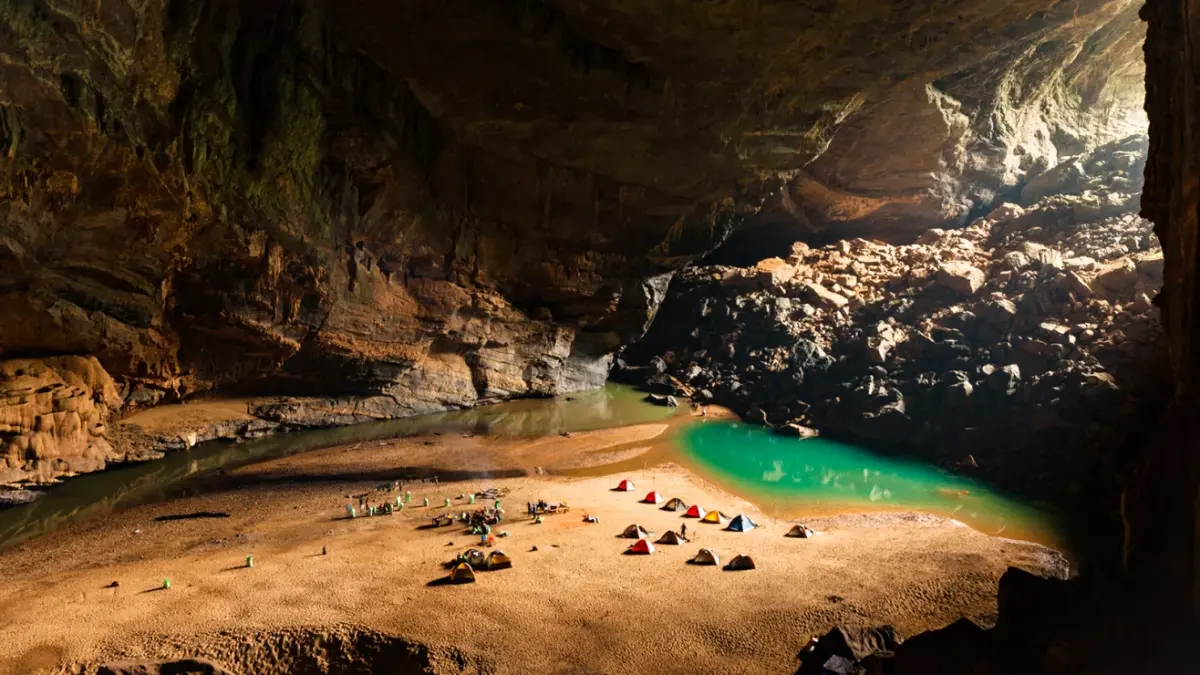
Massive chamber inside Hang Son Doong, the world's largest known cave passage, with a jungle and river
01 · Expedition

Hang Son Doong

The largest known cave passage on Earth, with a river, jungle, and its own microclimate inside. Access is tightly limited and only permitted through a licensed operator, making it one of the most sought-after expeditions in Asia.

Permits limited and booked well in advance
Multi-day trek with camping inside the cave
Serious fitness required — steep terrain and river crossings
Learn More →
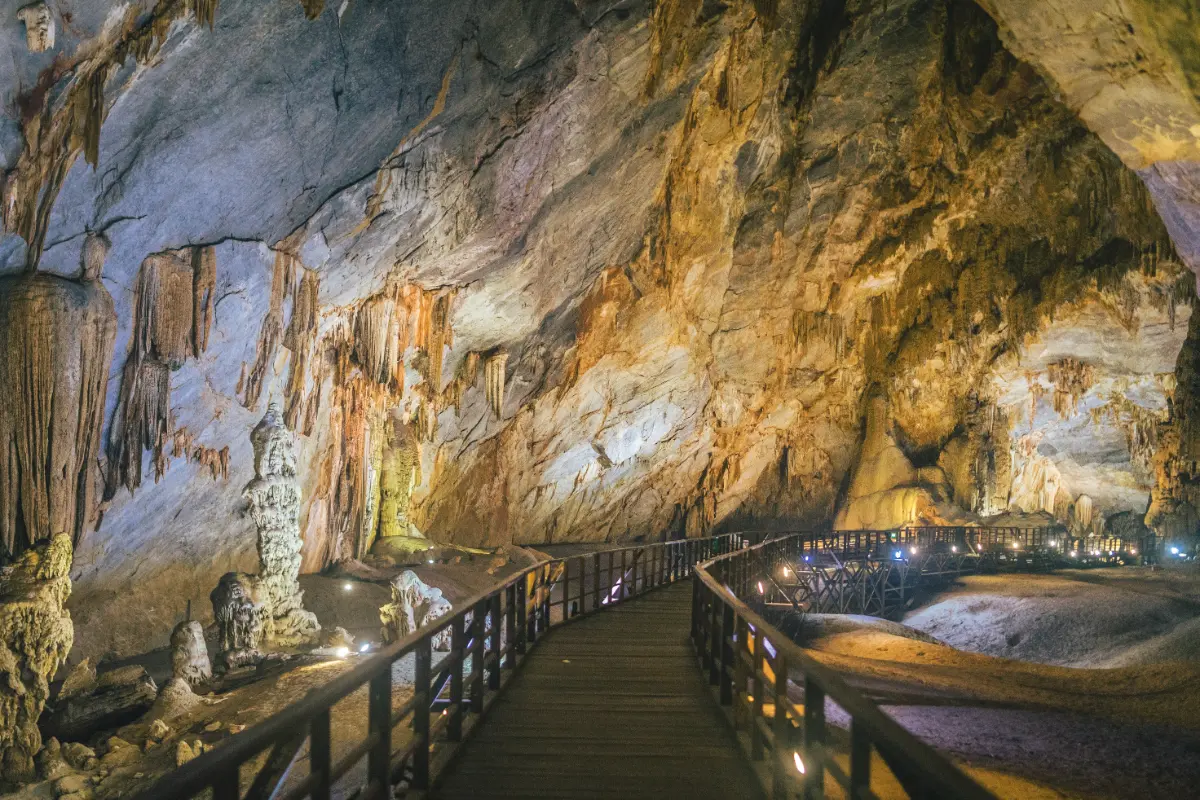
Wooden boardwalk inside Paradise Cave in Phong Nha, passing towering stalactites and stalagmites
02 · Easy Access

Paradise Cave (Thien Duong)

A vast, cathedral-like cave with towering stalactites and stalagmites, reached by a wooden boardwalk that makes it accessible to almost anyone. It is the most visited cave in the park and a good introduction to the region’s scale.

Wooden boardwalk runs about 1 km into the cave
Stairs and a short jungle walk to reach the entrance
Go early or late to avoid tour groups
Learn More →
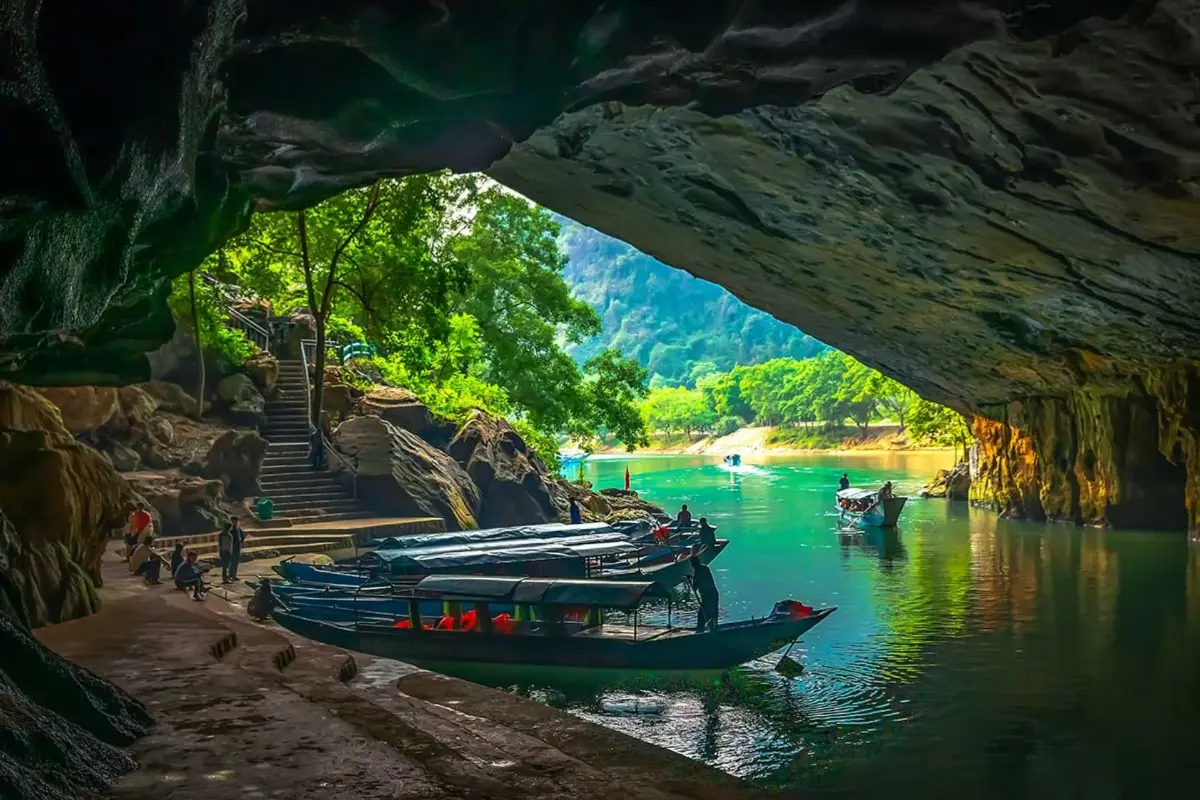
Boat travelling through the flooded interior of Phong Nha Cave on the Son River
03 · By River

Phong Nha Cave

The cave that gives the region its name, entered directly from the Son River by boat. Visitors glide into the mountain and walk a section of the interior, with dramatic rock formations lit along the way.

Traditional boat trip from Phong Nha village
Often combined with Tien Son Cave on the same route
Around 2 hours including boat time and walking
Learn More →
Visiting

When to visit Phong Nha

Phong Nha has a tropical monsoon climate. The dry season runs roughly February to August and is the best window for trekking and cave expeditions; the wet season brings heavy rain and can close caves and trails.

February – April Best Overall

Warm, dry, and comfortable. Ideal for trekking, camping, and full cave expeditions. Crowds are moderate outside Vietnamese holidays.

May – August Hot & Dry

Peak season. Reliable conditions for caving and river trips, but temperatures climb and it is the busiest time for domestic tourism.

September – November Wet Season

Heaviest rain, with flooding possible. Some caves and trekking routes close and tours may be cancelled at short notice.

December – January Cool & Damp

Cooler and often overcast with intermittent rain. Quieter, but check access and conditions before booking treks.

Practical

Practical information

Getting there & around

The nearest airport is Dong Hoi (VDH), about 45 km east of Phong Nha, with domestic flights from Hanoi and Ho Chi Minh City. Dong Hoi is also on the main north-south railway and sleeper bus routes, so Phong Nha fits easily between Hue and Hanoi.

From Dong Hoi, taxis, private transfers, and local buses reach Phong Nha village in around 45–60 minutes. Within the area, most travelers use bicycles, motorbikes, or arrange transport through their guesthouse or tour operator, since attractions are spread out.

Good to know

  • — Book major cave treks well in advance — permits are limited
  • — Bring sturdy shoes, a headlamp, and quick-dry clothing for treks
  • — Cave interiors can be cool and slippery — grip matters more than speed
  • — Carry cash — ATMs are limited outside Dong Hoi
  • — Check weather and cave conditions before any trek in shoulder season
Frequently Asked

Questions About Phong Nha

What is Phong Nha known for?

Phong Nha is known for its cave systems, including Hang Son Doong — the largest known cave passage in the world — and the UNESCO-listed Phong Nha-Ke Bang National Park. It is one of the oldest and largest karst landscapes in Asia, with hundreds of documented caves and underground rivers.

Is Phong Nha worth visiting?

Yes, especially if you are interested in nature, geology, or adventure travel. It offers everything from easy boardwalk cave visits to multi-day expeditions, and the surrounding countryside — rivers, rice fields, and limestone peaks — is genuinely beautiful. It is less suited to travelers looking for beaches or nightlife.

How long should I spend in Phong Nha?

Two to three days covers the main highlights: Phong Nha Cave by boat, Paradise Cave, and one trek or adventure activity. Add more time if you are doing a multi-day expedition such as Hang En or Son Doong.

How do I get to Phong Nha?

Fly to Dong Hoi (VDH), then take a taxi, private transfer, or local bus about 45–60 minutes to Phong Nha village. Dong Hoi is also on the main north-south train line and sleeper bus routes, making it easy to reach from Hue, Hanoi, or Ho Chi Minh City.

When is the best time to visit Phong Nha?

The best time is the dry season, roughly February to August, with the most comfortable conditions typically from February to April. The wet season from September to November can bring flooding and cave or trail closures.

Can I visit Son Doong Cave?

Access to Son Doong is tightly controlled and only available through a licensed operator on a multi-day guided expedition. Permits are limited and typically sell out well in advance, so plan early and be prepared for a demanding trek.

What should I know before visiting Phong Nha?

Book popular treks ahead, bring sturdy footwear and a headlamp, carry cash, and check conditions in shoulder season. Cave floors can be slippery, and some attractions are spread out, so arrange transport in advance.

What can I combine with Phong Nha?

Phong Nha is easily combined with Hue (3–4 hours south), Hoi An and Da Nang (4–5 hours), Hanoi (short flight or overnight train to Dong Hoi), and Ninh Binh on a north-central Vietnam itinerary.

Is Phong Nha suitable for families?

Paradise Cave, Phong Nha Cave by boat, and the Mooc Spring area are suitable for most ages and fitness levels. Multi-day cave expeditions such as Hang En and Son Doong require older children and good fitness — check minimum-age requirements with the operator.

For Travelers

Caves, jungle, and river country.

Phong Nha works best as a two- or three-day stop between Hue and Hanoi, with a mix of easy cave visits and one bigger adventure. Our specialists can arrange transfers, permits, and a pace that suits you.

Start Planning →
For Travel Professionals

Cave country expertise, on the ground.

If you are building Vietnam programs that include Phong Nha or the North Central Coast, we can support you with local DMC services, vetted cave and trek operators, and confidential trade rates across the region.

Visit the Trade Page →
Phong Nha-Ke Bang

Mountains, rivers and the world beneath them.

Phong Nha’s karst landscape is one of the oldest in Asia — a place where the surface and the underground world feel equally alive, and where the scale of the caves is hard to believe until you are standing inside one.