
Sun, sea, and a city that lives on the water.
Nha Trang is the capital of Khanh Hoa Province, on Vietnam’s South Central Coast. It sits on a wide bay sheltered by islands, with a 6-kilometre stretch of white sand — Tran Phu Beach — running along the city’s eastern edge. The beach is the centrepiece: swimming, sunbathing, and water sports are all on the doorstep of the city’s hotels and restaurants.
Beyond the beach, Nha Trang has a deeper history. The Po Nagar Cham Towers, built between the 7th and 12th centuries, are among the best-preserved Cham temple complexes in Vietnam. The city was also a significant port for the Cham kingdom before Vietnamese settlement, and later became a French colonial resort town.
What Nha Trang is
Before Vietnamese settlement, the area around Nha Trang was part of the Cham kingdom, a Hindu-Buddhist civilisation that controlled much of the South Central Coast from the 2nd to the 15th centuries. The Po Nagar Cham Towers, built between the 7th and 12th centuries, are the most visible remnant of that era — four brick towers standing on a hill overlooking the Cai River.
In the 17th century, Vietnamese settlers moved south, and Nha Trang became a small fishing and trading town. Under French colonial rule in the late 19th and early 20th centuries, it developed into a resort destination. Dr Alexandre Yersin, the bacteriologist who discovered the plague bacillus, established the Pasteur Institute here in 1895 and lived in Nha Trang for much of his life — his house is now a museum.
Today, Nha Trang is one of Vietnam’s most developed tourist cities. The skyline is dominated by hotels and resorts, the waterfront is lined with seafood restaurants and cafes, and the offshore islands offer snorkelling, diving, and amusement parks. It is a place designed for leisure — but with enough history and local life to keep things interesting.
Three parts of a visit
From island escapes to ancient temples, these are the experiences that define a visit.
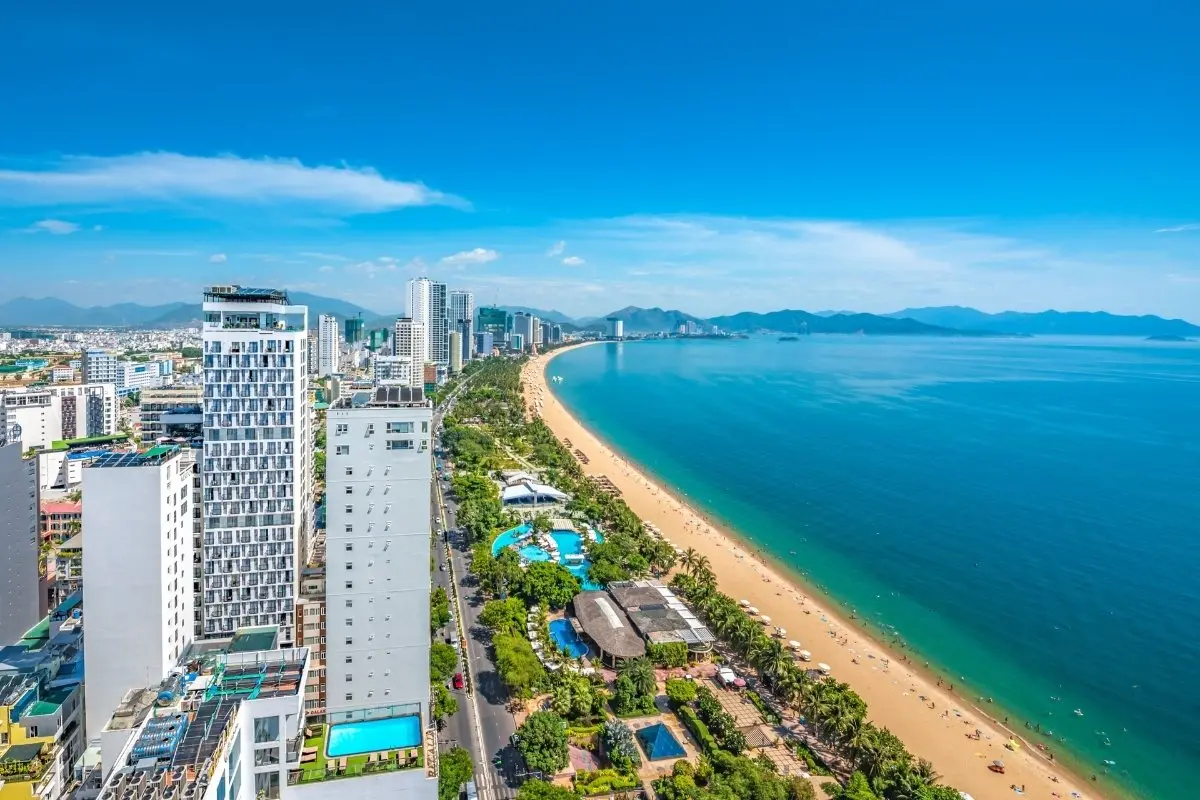
Tran Phu Beach
A 6-kilometre stretch of white sand and calm, warm water right along the city centre. Perfect for swimming, sunbathing, and water sports, with restaurants and cafes lining the promenade.
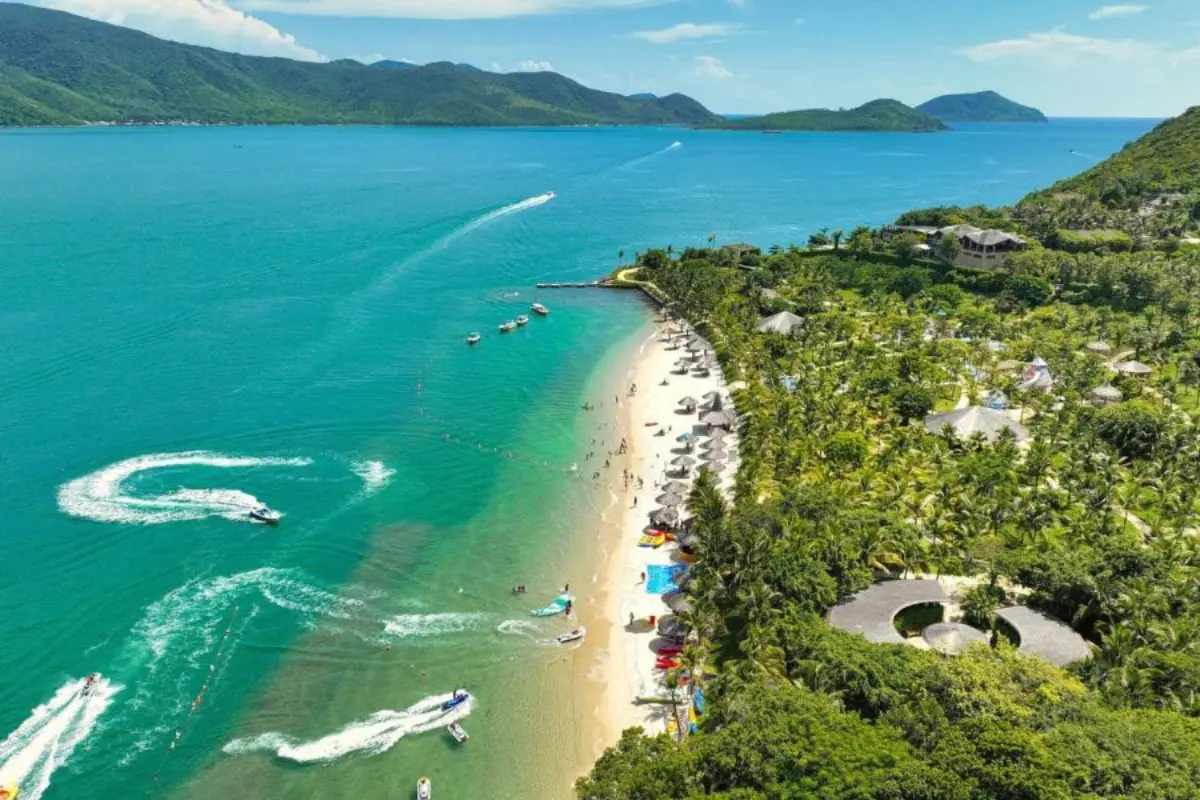
Island Hopping & Snorkelling
Nha Trang Bay is dotted with islands offering snorkelling, diving, and beach relaxation. Hon Mun is the best for coral and marine life; Hon Tam has a private beach and mud baths.

Po Nagar Cham Towers
Ancient Hindu temples built between the 7th and 12th centuries, overlooking the Cai River. The complex is smaller than Angkor but atmospheric, with four brick towers and a museum of Cham artefacts.
When to visit Nha Trang
Nha Trang has a tropical savanna climate with warm temperatures year-round. The dry season runs from January to August, with the best beach weather from February to April.
Warm, sunny, and comfortable. Ideal for the beach, island trips, and sightseeing. Crowds are manageable before peak summer.
Peak beach season. Very hot, especially midday, but perfect for swimming and water sports. Book flights and hotels early.
Wettest months, with occasional storms and rougher seas. Fewer crowds and lower prices, but boat trips may be affected.
Rain eases, temperatures are pleasant, and conditions improve. A good alternative if you want to avoid the summer heat.
Practical information
Getting there & around
Cam Ranh International Airport is 35 km south of the city centre. Buses (Dat Moi Company) run from the airport to central Nha Trang in about 45–60 minutes; taxis and Grab are faster but more expensive.
Within the city, Grab is the most reliable way to get around. Motorbike rentals are available for 100,000–150,000 VND per day. VinBus operates routes to Vinpearl, and cyclos offer a slower, more scenic option for tours.
Good to know
- — Use Grab or metered taxis (Mai Linh, Vinasun) — avoid unlicensed taxis and touts
- — Exchange money at gold shops in the city centre for better rates than the airport
- — Always agree on seafood prices and weight before ordering
- — Dress modestly at religious sites — shoulders and knees covered
- — Sun protection is essential year-round, even on cloudy days
Places connected to Nha Trang
Nha Trang works well as part of a wider South Central Coast or Vietnam itinerary.
Ho Chi Minh City
Vietnam’s largest city and main southern gateway. Flights to Nha Trang take about an hour.
Explore Saigon → TownHoi An
The UNESCO-listed ancient town, a 4–5 hour train or bus north of Nha Trang along the coast.
Explore Hoi An → CityDa Lat
The cool-climate hill station in the Central Highlands, reachable by bus from Nha Trang in 3–4 hours.
Explore Da Lat → RegionSouth Central Coast
Every destination we cover along Vietnam’s south-central coastline — beaches, islands, and Cham heritage.
Explore the Region →Questions About Nha Trang
What is Nha Trang known for?
Nha Trang is known for its long white-sand beach (Tran Phu Beach), island hopping and snorkelling in Nha Trang Bay, the ancient Po Nagar Cham Towers, and excellent seafood. It is one of Vietnam’s most developed beach resort cities.
Is Nha Trang worth visiting?
Yes, if you want a beach holiday with variety. Nha Trang combines a city beach with islands, Cham heritage, mud baths, and a wide range of dining and nightlife. It is less suitable for travellers seeking quiet, undeveloped beaches.
How long should I spend in Nha Trang?
Most visitors spend 3–5 days. Three days covers the beach, an island trip, and Po Nagar. Four to five days allows for VinWonders, mud baths, museums, and a more relaxed pace.
How do I get to Nha Trang?
Fly to Cam Ranh International Airport (35 km south), or take a train or sleeper bus from Ho Chi Minh City (7–8 hours) or Hoi An/Da Nang (4–5 hours). From the airport, buses, taxis, and Grab are available to the city centre.
When is the best time to visit Nha Trang?
The best overall time is February to April, with warm, sunny weather and manageable crowds. May to August is peak beach season — hot and sunny but busier. The rainy season runs from September to November.
What should I know before visiting Nha Trang?
Use Grab or metered taxis to avoid overcharging. Exchange money at gold shops for better rates. Agree on seafood prices before ordering. Dress modestly at temples, and use high-SPF sun protection year-round.
What can I combine with Nha Trang?
Nha Trang is easily combined with Ho Chi Minh City (1-hour flight), Hoi An and Da Nang (4–5 hours by train), Da Lat (3–4 hours by bus), or Mui Ne (4–5 hours) on a south-central coast itinerary.
Beach, islands, and seafood.
Nha Trang works best as a relaxed beach break in the middle of a Vietnam itinerary — with island trips, mud baths, and the Po Nagar temples as the highlights. Our specialists can arrange transport, hotels, and a pace that suits you.
Start Planning →Beach destination expertise, on the ground.
If you are building Vietnam programs that include Nha Trang or the South Central Coast, we can support you with local DMC services, vetted hotel partners, and confidential trade rates across the region.
Visit the Trade Page →Islands, beaches and turquoise water.
Nha Trang’s bay is one of the most beautiful in Vietnam — a sheltered expanse of islands, coral reefs, and calm water that makes it perfect for island hopping, snorkelling, and slow days by the sea.